Industry
Retail and e-commerce
Founded
2005
About END.
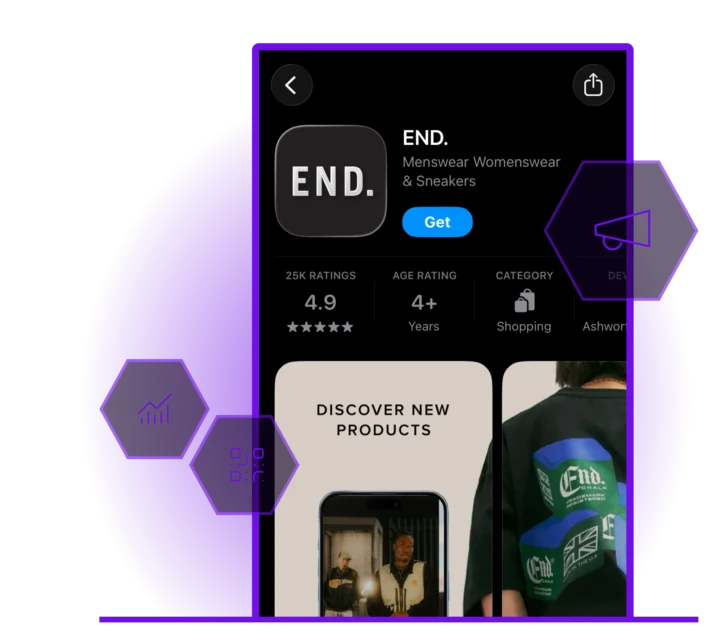
Christiaan Ashworth and John Parker, driven by their shared passions for fashion, design, art, and music, founded END. in 2005. What started as a vision to introduce renowned labels, emerging designers, and up-and-coming brands to the community of northeast England has grown into a leading destination for fashion, sneakers, and design. Now, END. attracts a global audience of loyal customers with its unique experiences, including physical concept stores, digital touchpoints, collaborations, in-store workshops, and live events.
Over the past two years, END. has embarked on a digital transformation, including a newfound focus on growing its app and e-commerce channels.
Challenge
Recognizing the inherent value of its app users — higher conversion rates, increased average order values, and deeper loyalty to the brand — END. saw an opportunity to use its app to achieve broader business goals. By directing users to the app, END. aimed to grow its active customer count, drive revenue growth, and provide the omni-channel experiences that digital-savvy shoppers expect.
However, the brand needed a user-friendly solution to direct users from its various marketing channels — TikTok, Google Ads, Instagram, organic — to the app. Without a deep linking mechanism, END. risked fragmented customer experiences, unclear channel attribution, and missed opportunities for app conversions and revenue.
Solution
END. kicked off its app growth journey by focusing on users already engaged with the mobile website.
Personalized, targeted Banners to maximize conversions
END. introduced Branch web-to-app smart banners to provide seamless pathways into the app. Unlike traditional static banners, Banners provided the team with flexibility to target users across various stages of their journey and personalize content to their specific intents and behaviors.
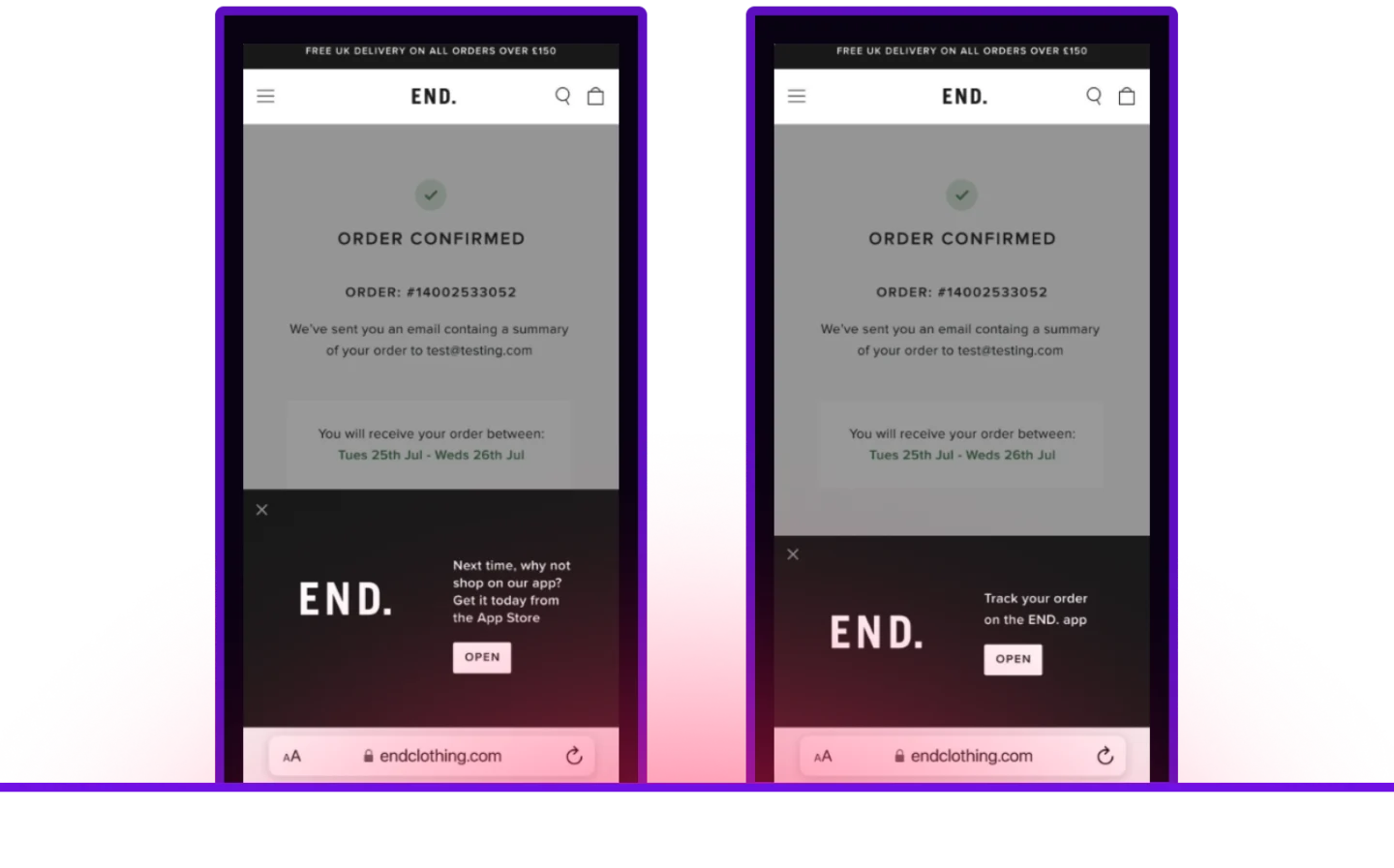
For example, the team deployed a banner strategy to target users at different funnel stages. On the homepage, END. used nonintrusive banners to create app awareness without disrupting the browsing experience for new users. On product pages, persistent banners provided additional nudges to opt for the app experience. And on post-purchase pages, banners displayed contextual calls to action (CTAs), like “Track your order on the END. app,” to provide enhanced value and introduce the app into the user’s future purchase behavior.
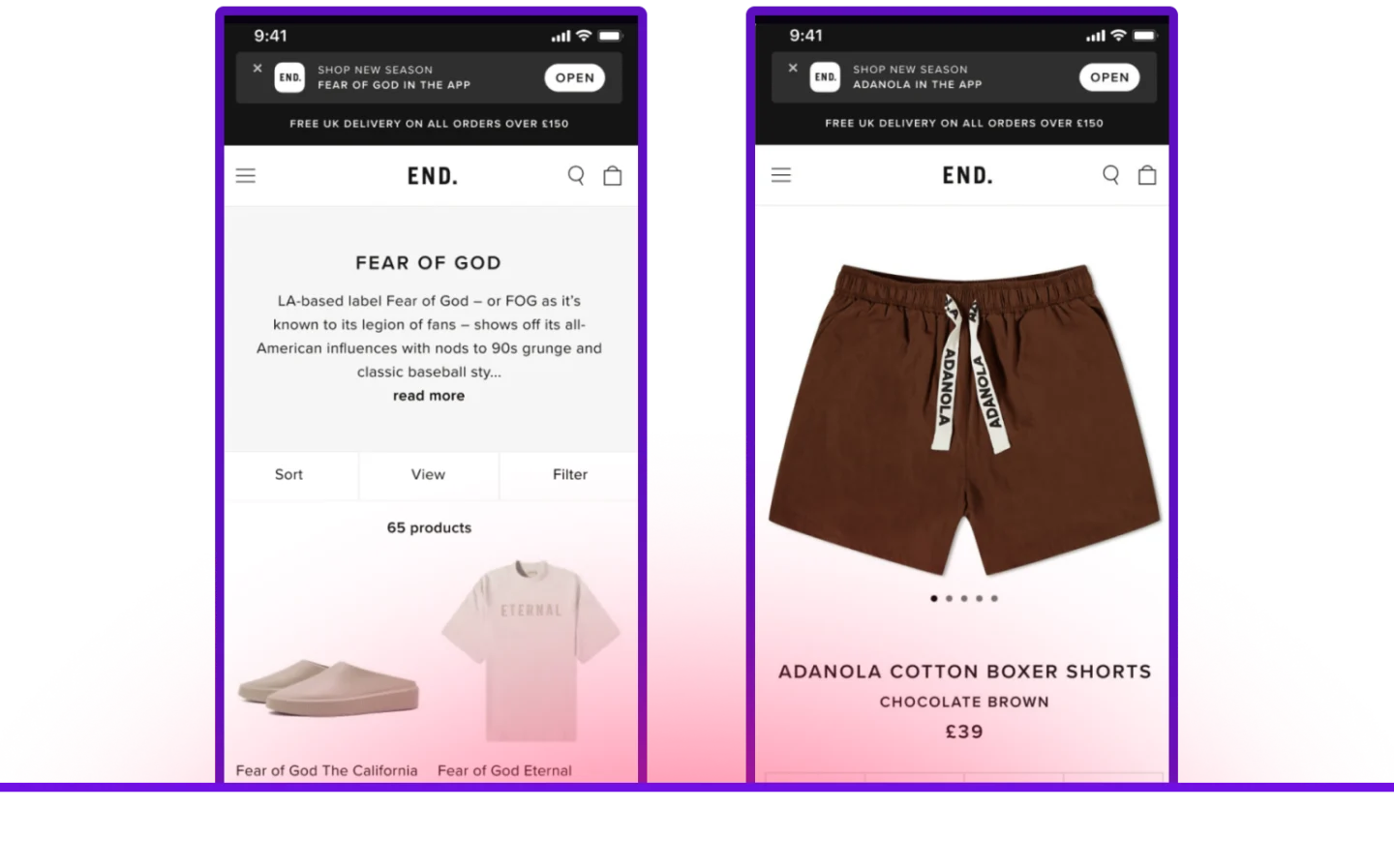
END. also tapped into its internal data and insights on customer preferences and brand performance to drive its app growth strategy. By utilizing Branch Banners on highly trafficked brand pages, like Fear of God Essentials and Adanola, END. increased app engagement and conversions.
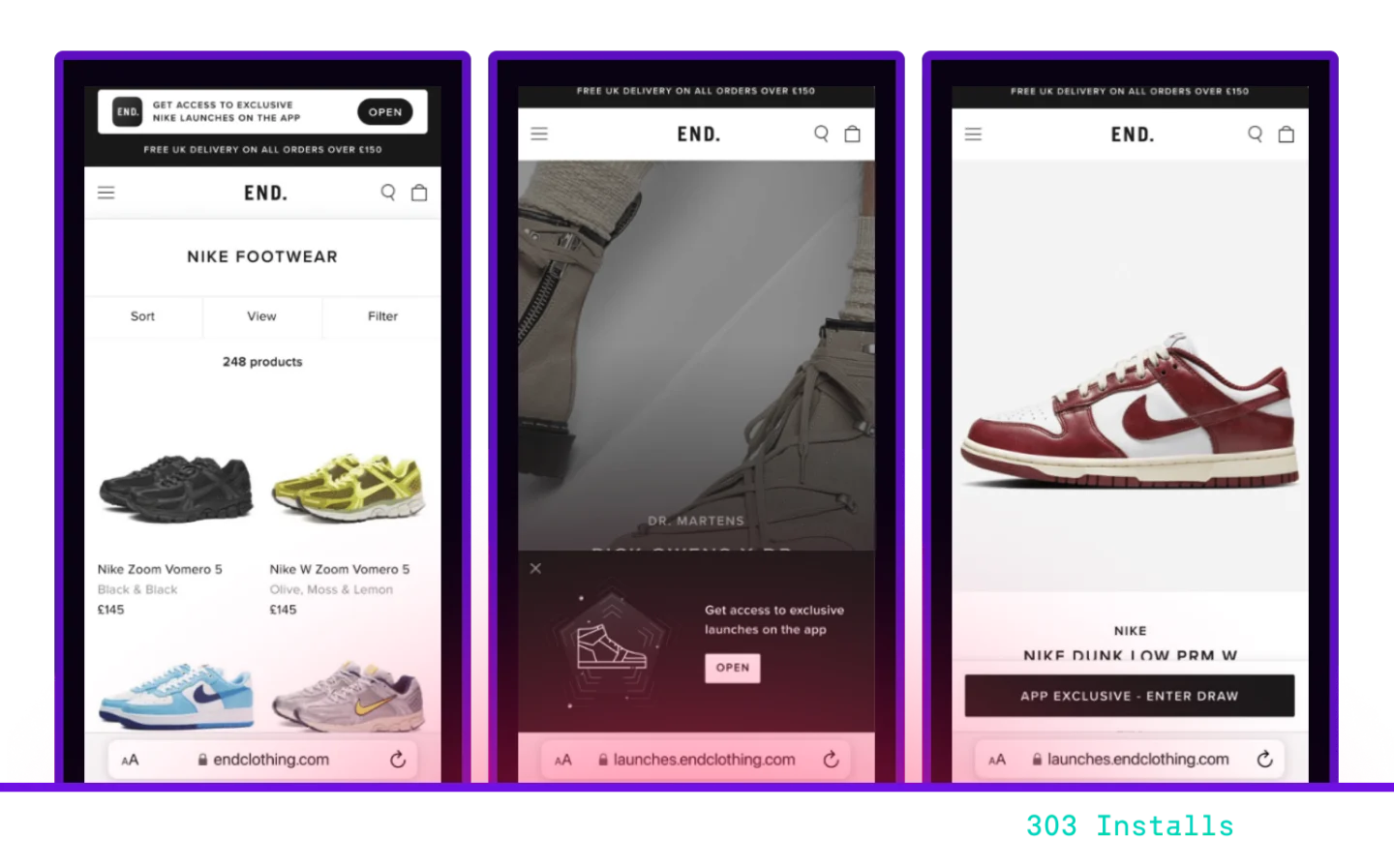
END. also incorporated smart banners into its app-only launches and presale campaigns. In one instance, it deployed Banners on Nike product listing pages (PLPs) footwear pages to drive sign-ups for app-exclusive sneaker launches and deep link users to the relevant in-app page. By customizing the look and feel of the banner to replicate its typical sign-up CTA, END. delivered a cohesive and familiar experience that generated nearly a 105% increase in installs. Its presale campaign achieved similar success; banners offering early sale access in the app grew installs by 114% week-over-week.

“The overall flexibility of Branch allowed us to focus on problem-solving rather than wasting time working around limitations, which can be an issue with most other third-party integrations. I was very impressed with the intuitive customization options that not only reduced our reliance on internal development resources but also allowed us to ensure a consistent experience for our users.”

Sab Jhitta, Senior Product Designer
END.
Sophisticated A/B testing to optimize copy, content, and CTAs
END. adopted a test-and-learn strategy with its web-to-app banners, running 16 A/B tests across 20+ sites to uncover key insights into user preferences and behaviors.
The team aimed to answer key questions about banner content, design, and copy, including:
- Is a “close” button necessary?
- Does the app icon need to be as prominent as it is?
- Would the app name or brand message drive more conversions?
- Which CTA text performs best: “Get,” “Download,” or “Open”?
- Should the banner be integrated into the navigation to improve confidence?
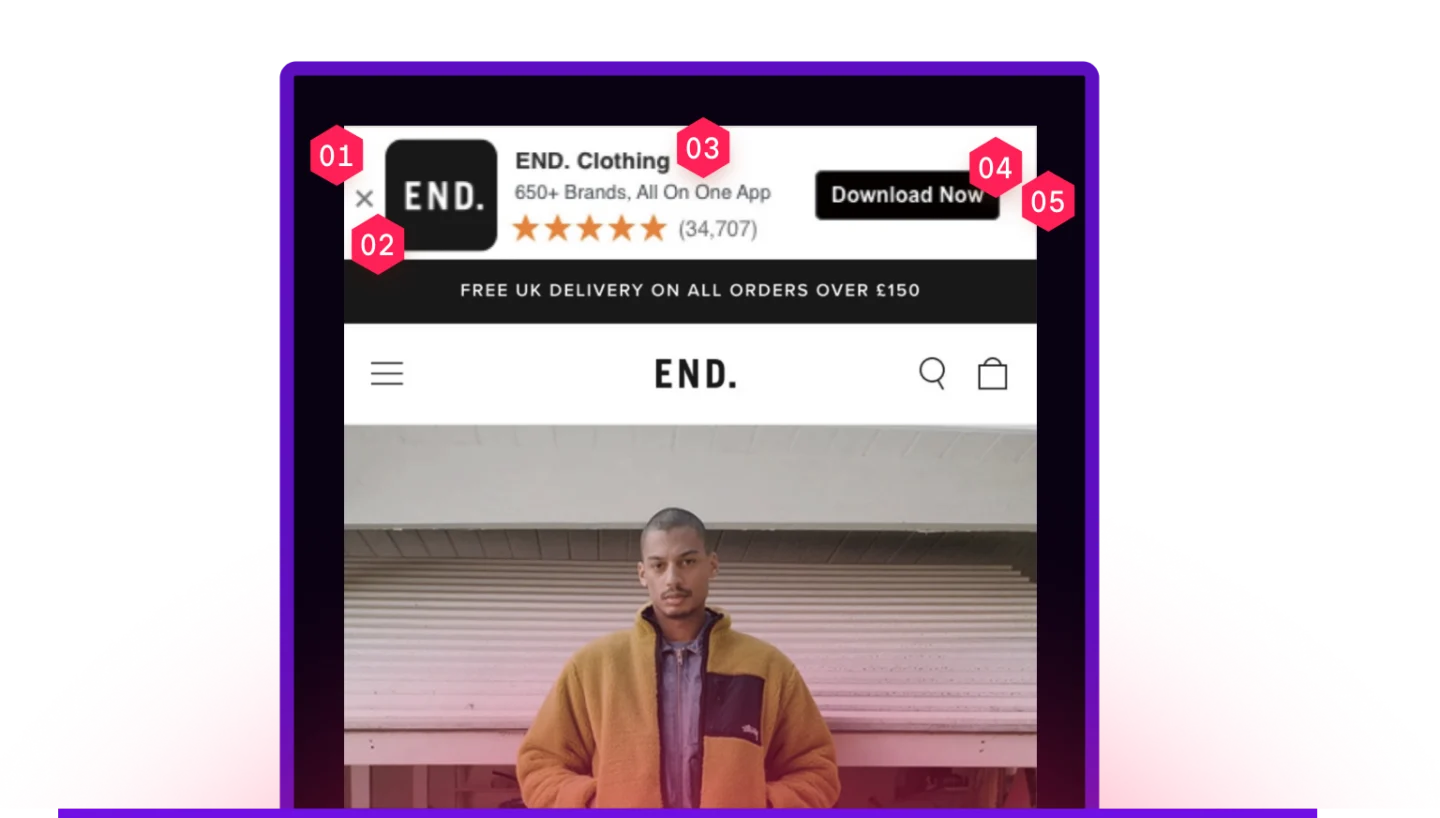
The A/B tests gleaned conclusive results about which banners yielded higher conversions and revenue. In one instance, the team tested post-purchase banner copy and found that prompting users to download the app to track their recent orders performed significantly better than a generic app CTA, doubling view-to-click, view-to-install, and open ratios.
Creative solutions to turn obstacles into app growth opportunities
END. demonstrated remarkable agility by using website downtime as an opportunity to promote app adoption. Instead of losing users to a nonfunctioning mobile website, the team quickly launched a smart banner within 30 minutes to redirect visitors to the app. This solution, which would have taken a week to implement with in-house engineering, minimized disruption and converted web visitors into valuable app users. The initiative resulted in an 11.86% view-to-click (VTC) rate, showing strong conversion from interest to action. Additionally, the view-to-purchase (VTP) rate held steady at 1.03%, proving the banner’s effectiveness in turning browsing traffic into sales.
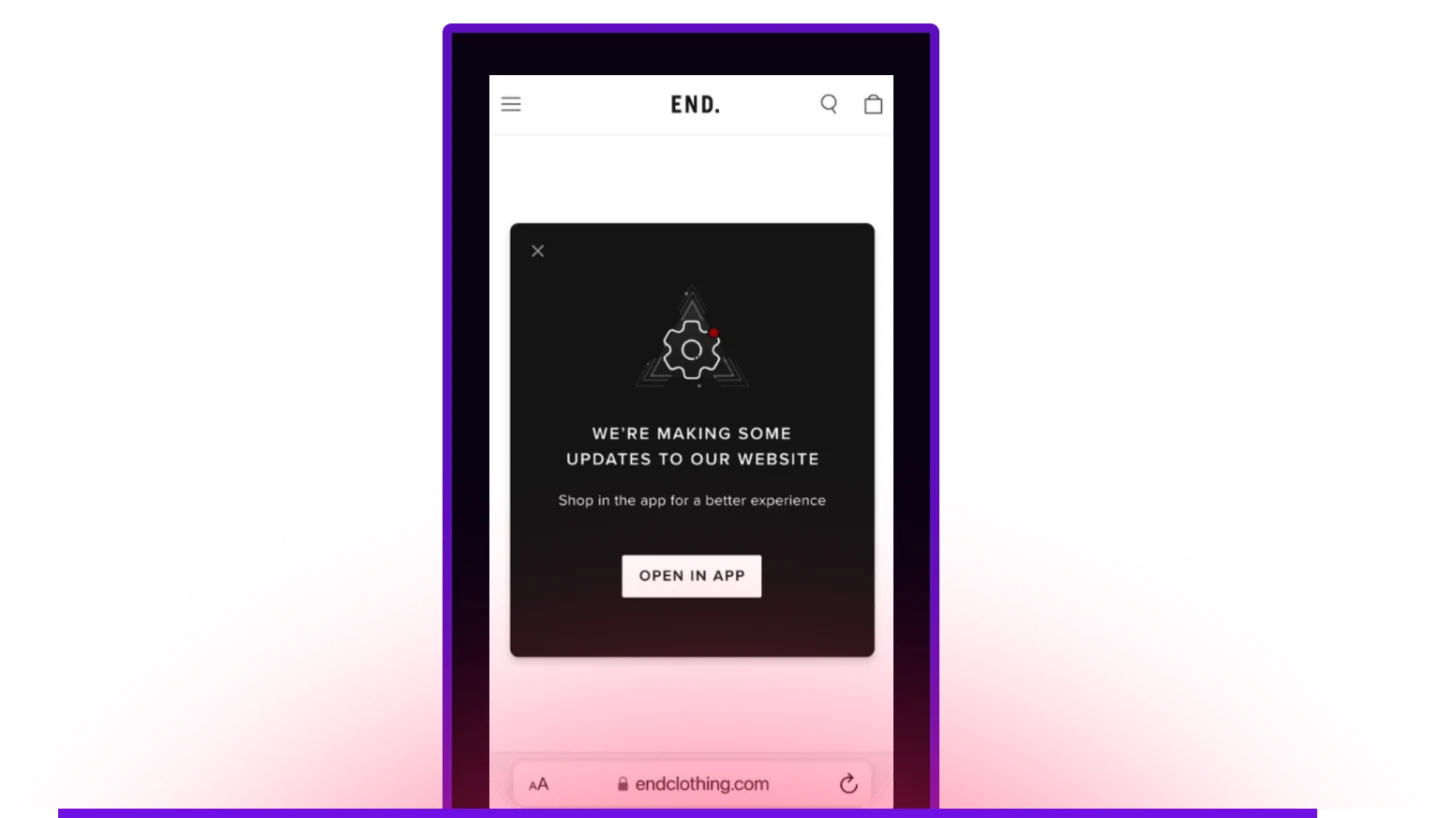
“Banners made it really easy for us to implement a quick solution to redirect traffic from our marketing channels over unexpected site downtime. This allowed us to keep paid channels live, minimizing disruption and performance while creating a smooth user journey that directed to the app.”

Ellen Hainsworth, Performance Marketing Manager
END.
Results
END. saw a significant boost to its bottom line with the implementation of Banners. In FY24 Q1, the banners drove a 44% lift in revenue quarter-over-quarter (QoQ) and a 105% increase in app installs. Impressively, they accounted for 44% of all purchases during the quarter. The top-performing banner alone generated 31% of total attributed revenue with a .24% VTP rate and a 1.95% VTC rate.
Beyond the quantifiable impact, END. has revamped its approach to app growth. Branch’s intuitive and flexible platform has ushered in a new era of autonomy for the marketing team. With full ownership over the web-to-app process, it can now independently deploy tests, create and launch banners, and analyze campaign performance. This independence not only fosters rapid iteration and adaptation but also enables the team to make smarter investment decisions. By understanding the true value of app users and the impact of its various marketing channels, END. strategically allocates its marketing budget to maximize return on investment (ROI) and achieve revenue targets. Working closely with its Branch account team has further enhanced END.’s ability to troubleshoot and innovate, ensuring it remains ahead of the curve in app growth strategies.
Next, the company plans to expand its strategy by implementing deep linking across additional channels, including email and in-store QR (quick response) codes, while also enhancing its personalization efforts.