

Your loyalty program has great perks. The problem is getting customers to them.
Branch data shows that 60% of loyalty emails fail to deep link into the app. Mobile web visitors browse your rewards catalog and leave without installing. QR codes in stores generate scans that never reach your loyalty enrollment page. At every touchpoint, you’re losing the customers who were already interested — not because your loyalty program isn’t compelling, but because the infrastructure connecting it to the app is broken.
Think of your app as the front door to your loyalty program. It’s where customers keep track of points, stay logged in, and claim rewards without friction. One study found that when customers download your loyalty app, they spend 38% more and purchase 40% more frequently. Not because the rewards changed, but because the app made points visible and accessible. Getting them there is the job.
Here’s how to close the three biggest leaks between loyalty intent and loyalty revenue.
Leak #1: Your loyalty emails aren’t reaching the app
Email is one of the highest-intent channels you own. When someone opens a “You have 500 points expiring” notification, they want to act on it. But if that email routes them to a mobile web page instead of directly to their rewards balance in the app, you’ve already lost the moment — and the data.
The fix
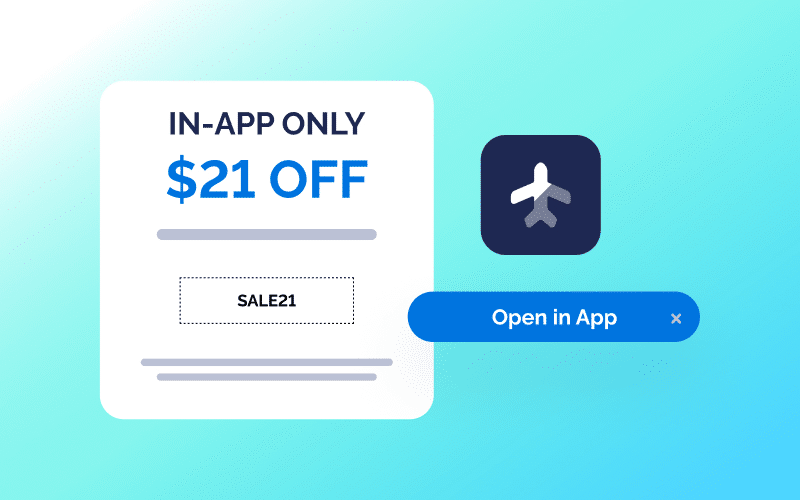
Every loyalty email should use deep links that detect app status and route accordingly. If the customer has your app installed, the link opens directly to the relevant screen — their rewards dashboard, an expiring offer, a personalized deal. If they don’t, they go to the app store, install, and land on that same screen automatically. That fallback matters: Without it, non-app users hit a dead end, and you lose the install opportunity entirely.
Branch integrates directly with your email service provider (ESP) to generate these links for every campaign without manual link-building and gives you visibility into which emails are driving actual in-app conversions, not just clicks that disappear into reporting black holes.
In action
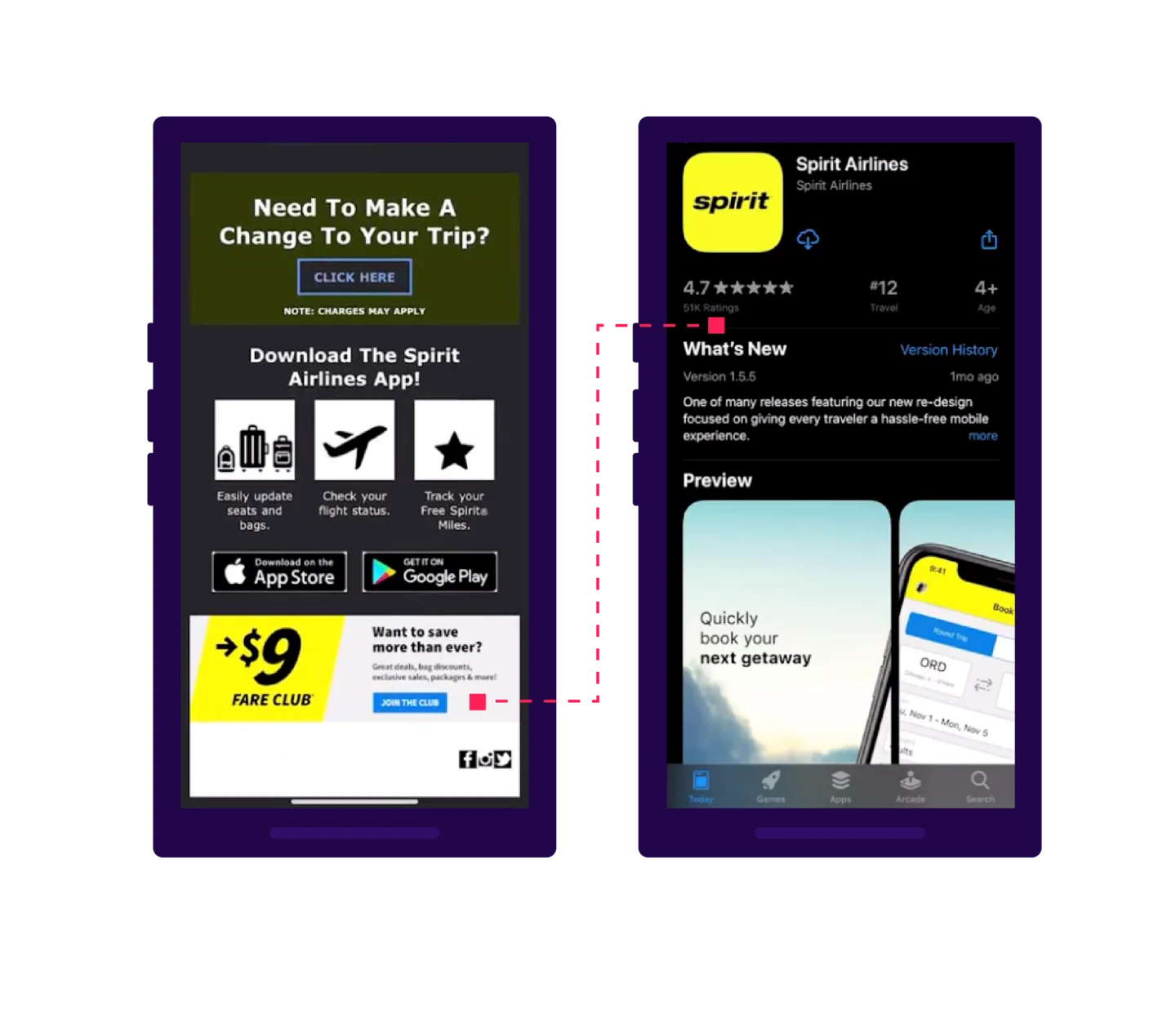
Spirit Airlines identified high-value transactional emails where customers clearly wanted to be in the app — Free Spirit® rewards miles tracking, check in, add bags, seat selection. Previously, those emails only navigated to the mobile web, where customers still had to reenter their confirmation code and name. With Branch, Spirit now detects app status automatically and deep links customers directly to their trip or rewards details — no reentry required. Within five months, Spirit’s monthly active users (MAUs) grew by 25%.
Leak #2: Your mobile web traffic isn’t converting to app users
App users are 10x more valuable than web users. For loyalty programs, that gap is even more consequential. A customer who browses rewards on mobile web and leaves without installing is a repeat purchase you didn’t get.
Most brands already have substantial mobile web traffic driven by search engine optimization (SEO), paid search, and email. The question is whether that traffic is working as hard as it could be. A user visiting your site to check their points or browse your menu is already high intent. If they leave without installing the app, you’ve missed the highest-value conversion available to you.
The fix
Every mobile web visit from a loyalty-minded customer is a conversion opportunity — but only if you intercept it at the right moment with the right message. The fix is deploying smart banners that detect who’s visiting, what they’re looking at, and whether they already have your app — then routing them accordingly.
Branch Banners handles that detection automatically, serving contextually relevant prompts across your mobile web pages without requiring engineering work for every campaign. The targeting isn’t one-size-fits-all: A first-time visitor browsing your menu sees a different prompt than a loyalty member checking their points balance. For users who don’t have the app yet, Branch handles the install and drops them directly into the loyalty experience they were already looking for. For users who do, the banner bypasses the app store entirely and opens the relevant in-app screen directly.
In action
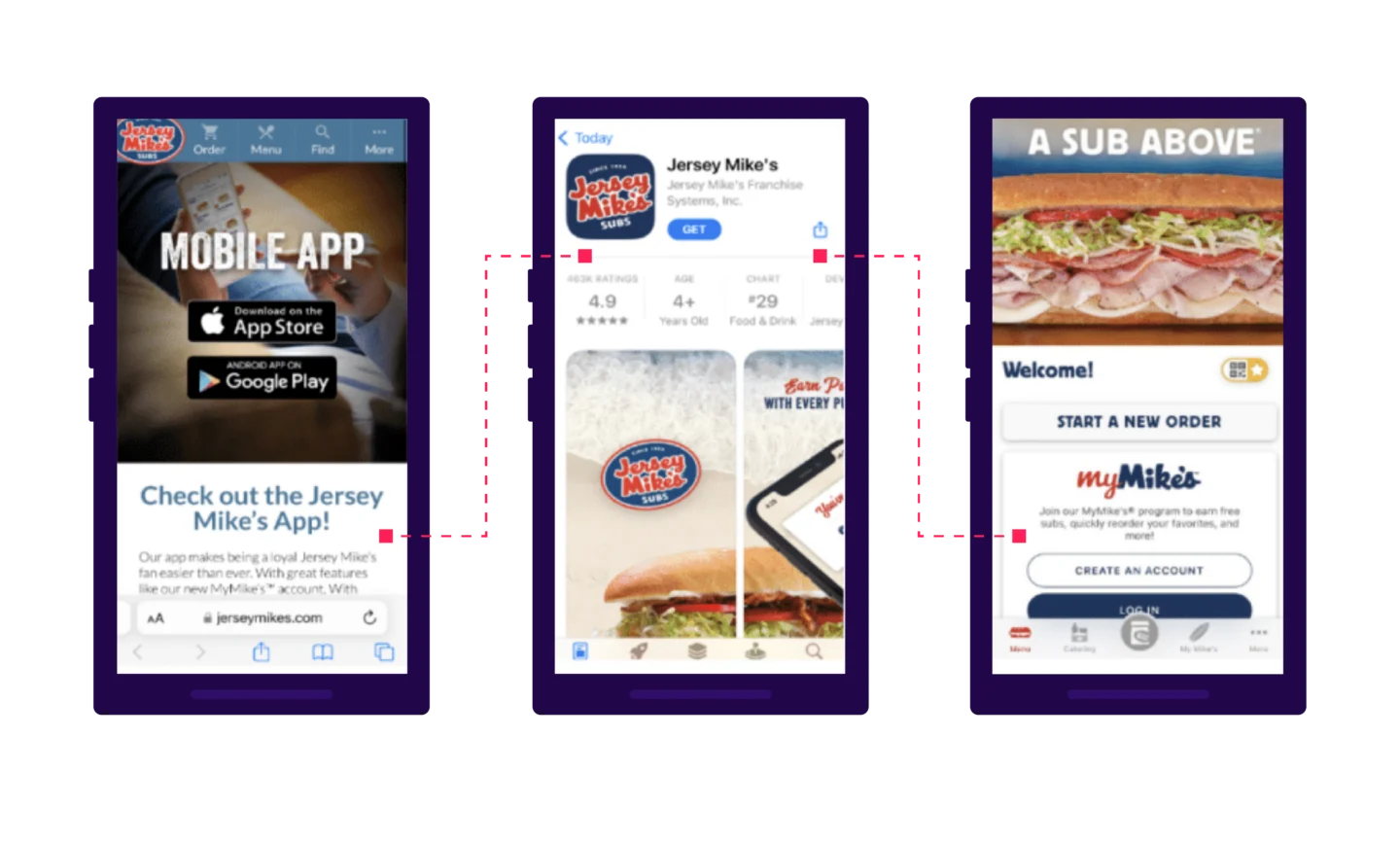
Jersey Mike’s does this with a full-page interstitial that intercepts mobile web visitors with a direct prompt: “Check out the Jersey Mike’s App.” The message isn’t generic — it’s tied specifically to the MyMike’s loyalty program, with a clear value prop around earning free subs and reordering favorites. Visitors who tap through go to the app store if needed, then land directly on a “Create an Account” screen to enroll in the loyalty program. The experience is seamless, the deep link captures intent, and the customer ends up exactly where Jersey Mike’s wants them — inside the app, signed into the loyalty program, ready to order.
Leak #3: Your offline touchpoints aren’t feeding your digital loyalty loop
If you’re a quick-service restaurant, retailer, or travel brand, many of your most loyal customers interact with your brand physically — at checkout, in a hotel lobby, at the gate, picking up a to-go order. Those are high-intent moments. The customer is already in a transactional mindset. And in most cases, those touchpoints aren’t doing anything to deepen the digital relationship.
QR codes are the obvious bridge, but most implementations stop at “scan to download.” A generic app store redirect doesn’t tell you anything, and it doesn’t give the customer a reason to act. The opportunity is to make the scan worth something: Route them directly to a loyalty enrollment screen, a rewards offer, or a specific feature like mobile check-in or order tracking.
The fix
Make every physical touchpoint a tracked, deep-linked entry point into your loyalty program — not just a generic redirect to the app store. Every QR code should route customers to a specific in-app experience, whether that’s a loyalty enrollment screen, a rewards offer, or an order-ahead function, and you should tag every scan to the location and campaign that generated it.
Branch QR codes do both: Customers who already have the app bypass the app store and land directly on the right screen, while those who don’t get a smooth install-and-land experience. And because every scan gets attributed, you know exactly which placements are driving installs and enrollments and can optimize without reprinting materials or disrupting live campaigns.
In action
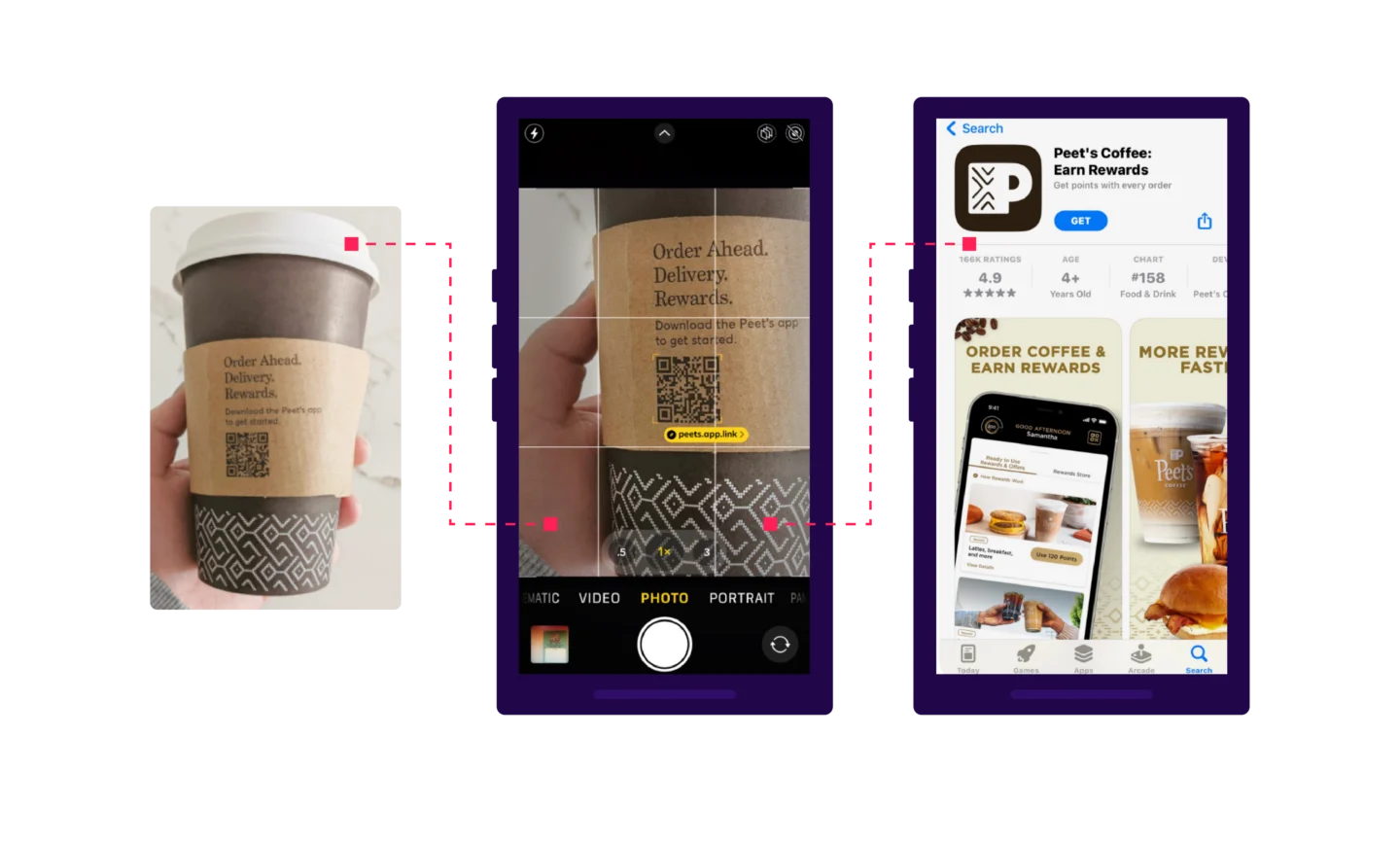
Peet’s placed Branch-powered QR codes on store signage, to-go cups, and coffee cards handed out by baristas, routing customers directly to the loyalty program, rewards catalog, and order-ahead features in the app. At peak, the company saw a 4.5x increase in attributed purchases — with real-time revenue data tied back to specific loyalty campaigns and placements.
Get started
The leaks in your loyalty program are costing you customers you’ve already won. Sixty-six percent of enterprise brands plan to improve the profitability of their loyalty programs in the year ahead — and the investment is already happening. Alaska Airlines just launched a new rewards tier to capture nonflying spend; Starbucks is rolling out a major loyalty revamp. Both are betting that loyalty infrastructure is the growth lever for 2026.
The good news: Plugging these leaks doesn’t require rebuilding your loyalty program from scratch. The audience already exists. The intent is already there. Fixing the infrastructure that connects both is one of the fastest paths to return on investment (ROI) available to you.
Ready to get started? Reach out to a Branch team member today.