
We all love to talk about the growth tactics that aren’t working anymore. User-level tracking is disappearing. Personalization is getting harder. Privacy regulations keep shifting. Everyone knows what’s broken.
What gets less attention are the tactics that are working, but that most teams simply aren’t using.
Branch’s recent State of App Growth survey of 750 marketing leaders confirmed this. Some of the most effective growth levers remain dramatically underutilized, not because they’re unproven, but because they fall outside the standard playbook of paid social, search ads, and app store optimization (ASO).
Here are three growth levers worth a closer look.
QR codes for anywhere-to-online engagement
When marketing teams talk about acquisition channels, the conversation centers on ASO, Google Ads, and paid social. But there’s far less focus on the physical and digital touchpoints where customers are already engaging with the brand: stores, packaging, events, even desktop browsing sessions.
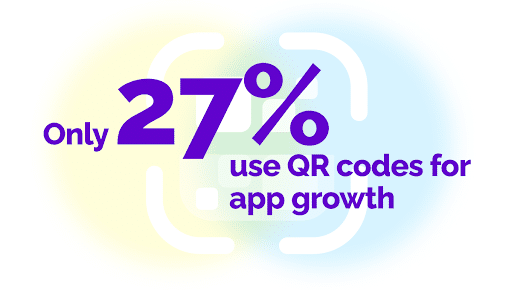
The survey data backs this up: Fewer than one in three marketers use QR codes or offline touchpoints to drive app growth. That’s a huge missed opportunity. These aren’t cold prospects; they’re customers already choosing to engage with your brand.
KFC understood this when it created The Colonel’s Arms campaign in London — a one-week pub takeover during the World Cup to launch its delivery service. The brand integrated QR codes throughout the experience: front door, menus, even bathroom mirrors. Scan the code, install the app, and you’d land directly on the delivery feature, not a generic homepage.
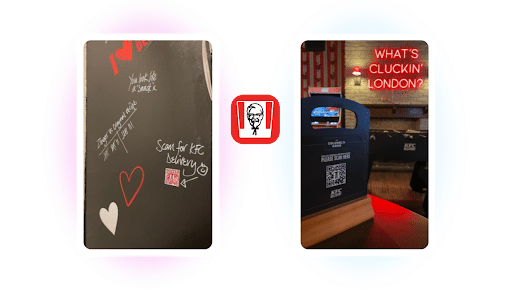
KFC saw an 85% uplift in app installs and over 1,000 scans in the first three days. Major U.K. newspapers covered it too, generating free publicity.
The tactic is QR codes, but the broader insight is that acquisition doesn’t start and end with paid media. Customers are already in your stores, at your events, holding your products. Those are warm leads. Yet most marketing budgets remain heavily weighted toward acquiring strangers online rather than converting customers who are already engaging with the brand offline.
Deep linking for retention, not just acquisition
According to the survey, 63% percent of marketers use deep linking for context-preserving onboarding, and 61% apply it to improve ad campaign performance. These are smart, proven use cases.
This matters because acquisition is expensive and getting more so. Thirty-six percent of marketers in our survey cite cost-effective scale as their biggest challenge. Yet the same technology that reduces friction for new users could be bringing back the ones who already installed your app and then disappeared.
The best retention strategies don’t rely on generic push notifications. They use deep links to bring users back to something specific and relevant — unfinished content, a sale item, a feature they’ve yet to try. Targeted reengagement beats spray and pray every time.
Referral programs are another underutilized application. When done right, deep linking ensures that when a user shares your app, their friend lands exactly where they need to be — a specific product, a promotion, a personalized experience. The sharing user gets credit, the referred user gets value, and you acquire a customer who was pre-sold by someone they trust.
Web-to-app banners to convert organic and paid traffic
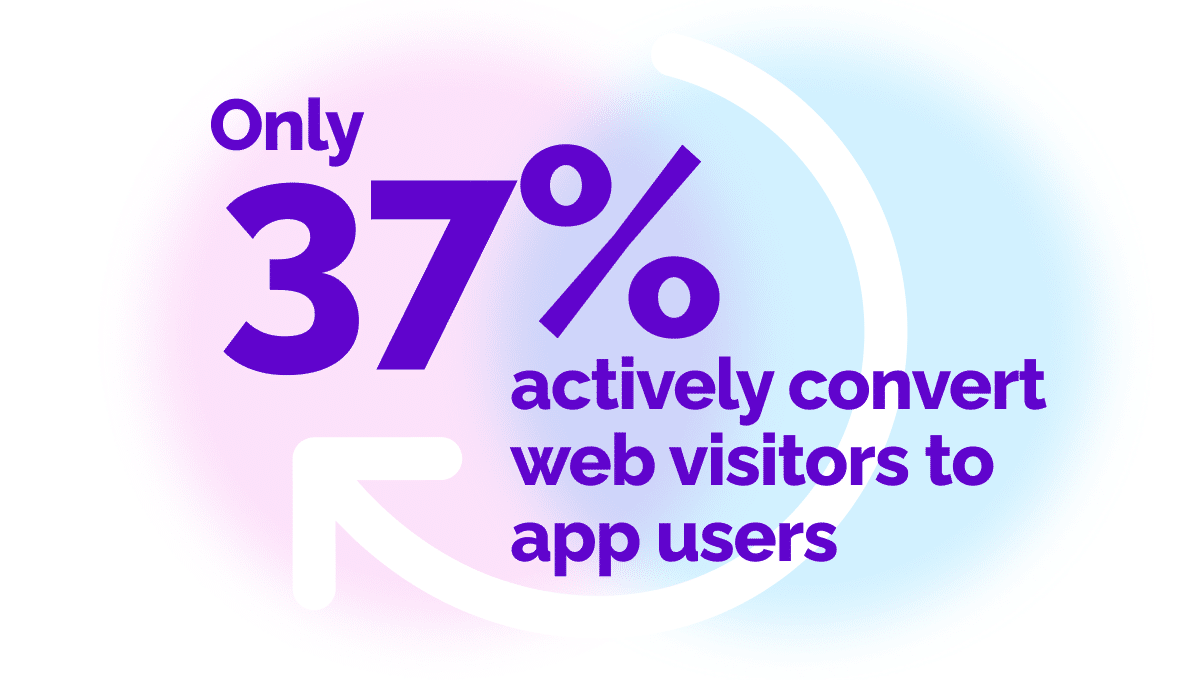
Most organizations spend significant amounts driving traffic to their mobile website, yet the survey highlighted that only 37% actively convert those visitors into app users. Nearly two-thirds are paying to acquire traffic, watching it land on mobile web, and hoping users find their way to the app organically.
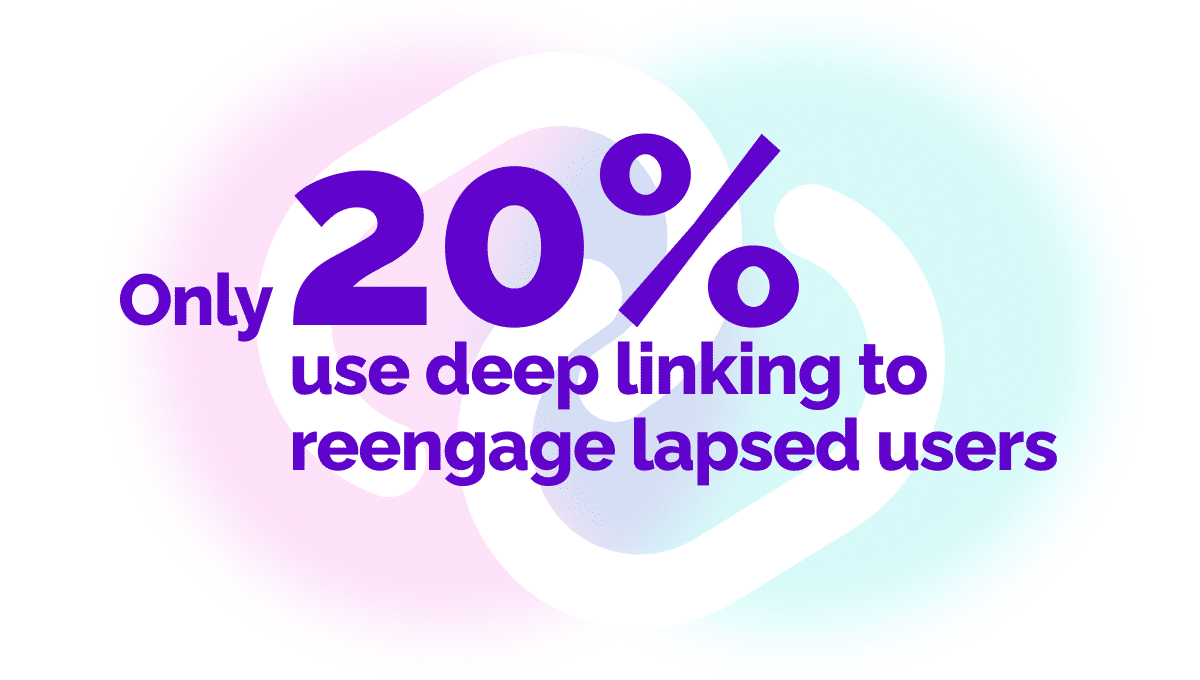
The gap is in how few extend this capability across the rest of the user journey. Only 20% use deep linking to reengage lapsed users, and just 5% apply it to referral programs.
Those mobile web visitors represent traffic you’ve already paid for. They’re showing purchase intent and engaging with your brand. The mobile app typically delivers better engagement, higher conversion rates, and stronger retention than mobile web. But without an intentional conversion strategy, you’re leaving that value on the table.
PUMA’s approach during its 25 Days of PUMA campaign demonstrates what’s possible. The team deployed smart banners on mobile web to promote app-exclusive holiday deals. Setup took less than half a day. The results: 8,000 app installs in 25 days, with banners driving 12% of nonpaid attributed revenue, and a 4.38% view-to-click rate — more than double its baseline.
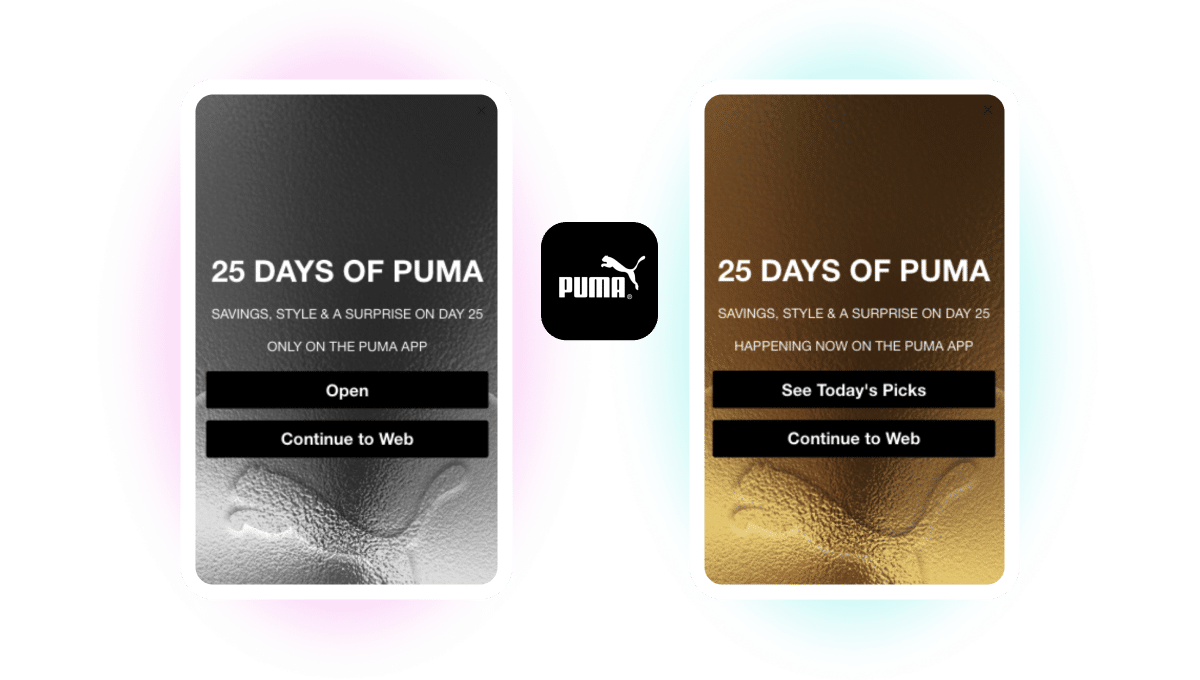
The strategic advantage wasn’t the technology. It was treating web-to-app as a core part of acquisition, not an afterthought. PUMA tested creative elements in real time and optimized based on performance. Because the team used deep-linked banners, users who converted went directly to relevant content, not a generic homepage.
You’re already paying to drive mobile web traffic through search engine optimization (SEO), paid search, and social ads. The opportunity is in converting more of that traffic into app users.
The path forward
These three tactics don’t require massive budget increases or technology overhauls. What they require is a shift in how your organization thinks about growth — moving from a narrow focus on paid media to a broader view of every customer touchpoint.
Read the full State of App Growth report to see how 750 marketing leaders are navigating growth challenges in 2025.