

Most app growth strategies rely on paid channels. The most efficient growth, though, often comes from users sharing your product for you. The problem is that most links aren’t built to support it.
Standard URLs break attribution, create friction in the user journey, and fail to capture the full impact of peer-to-peer sharing. Links built for viral sharing solve this by combining deep linking and attribution to turn every share into a trackable growth opportunity, from first click to conversion.
In this guide, we’ll break down what makes a link shareable enough to drive viral growth, how to build links that generate app downloads, and how to measure their impact.
What are viral links, and how do they drive app growth?
Viral links turn user sharing into a scalable growth channel by routing every click to the right destination and tying each share to measurable outcomes. Key capabilities include:
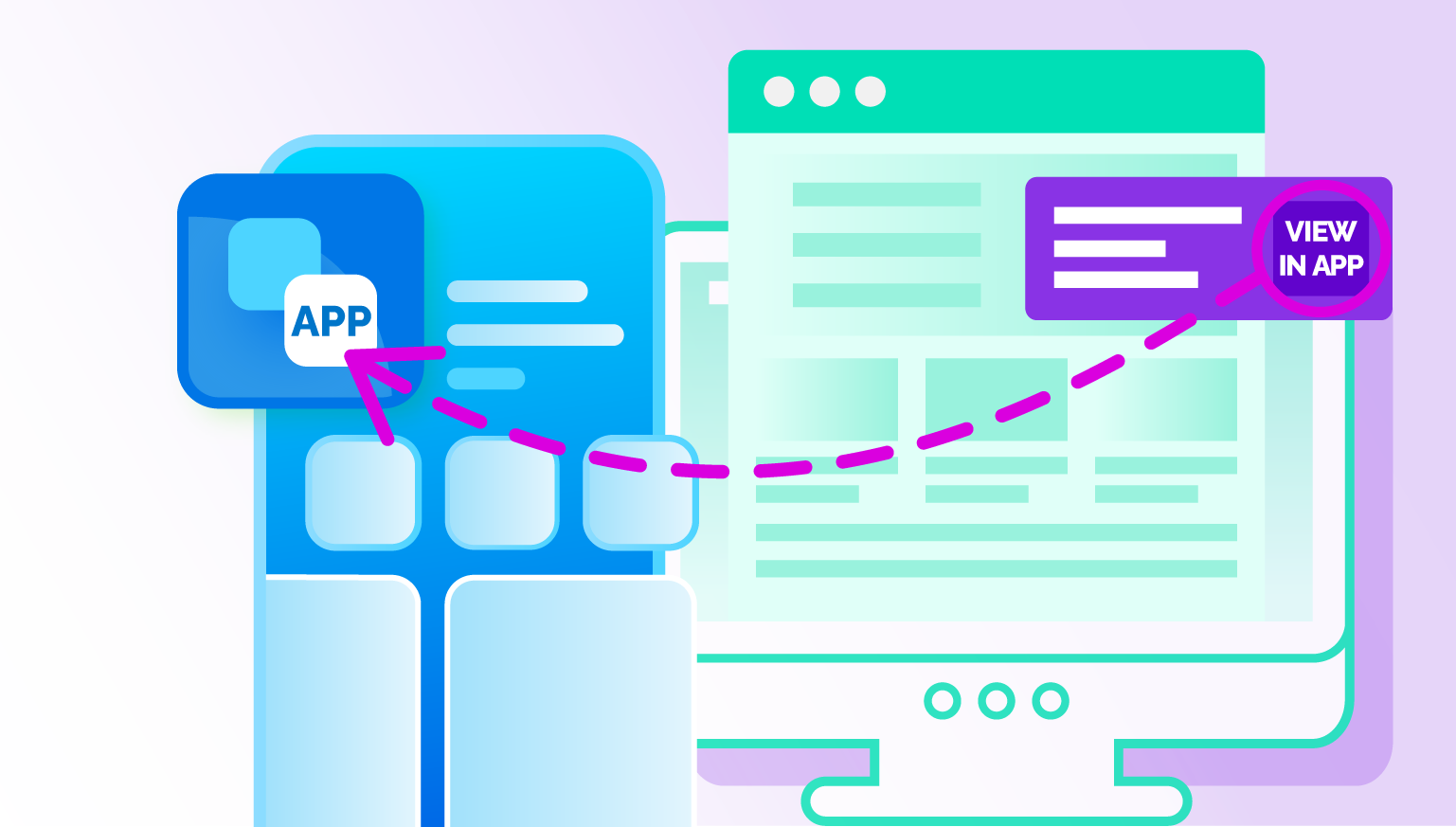
- Deep linking that routes users directly to in-app content
- Deferred deep linking for new users after install
- Cross-platform compatibility across iOS, Android, and web
- Attribution tracking from share to conversion
Together, these capabilities turn every share into a trackable entry point tied to installs, engagement, and revenue across peer-to-peer messaging, social media, influencer campaigns, and referral programs. Standard web links break that chain by losing context, misrouting users, and dropping attribution. The right infrastructure keeps it intact and builds a growth channel that compounds over time.
Essential elements that make links go viral for mobile apps
Links don’t go viral by accident. These three elements make the difference:
Compelling content hooks that drive shares
Your link needs to connect to content that gives users a genuine reason to share. Content that feels personal or immediately useful spreads. Generic promotional material doesn’t. A music streaming app that lets users share a specific song timestamp creates a more shareable moment than a generic album link. The preview card matters too. The image, headline, and description that appear when a link is shared on social platforms determine whether someone’s network clicks through.
Platform selection and timing
Different platforms serve distinct roles in a viral link strategy.
- Instagram and TikTok drive visual content discovery and influencer-led sharing.
- LinkedIn performs best for professional tools and B2B apps.
- WhatsApp enables high-trust, peer-to-peer sharing that often converts at higher rates.
Analyze when your existing users are most active, then coordinate sharing initiatives around those windows. For global audiences, account for time zone differences and cultural moments that affect sharing behavior.
Built-in sharing mechanisms and social proof
Friction between wanting to share and being able to act on it kills viral potential. Native share sheets that integrate naturally into your app make sharing feel like part of the experience instead of an interruption. Prepopulate share messages with context while letting users personalize before sending.
Social proof amplifies performance. Displaying share counts or engagement metrics signals that others have already participated, which encourages new users to do the same. The technical foundation here matters too: Deep links preserve the user’s intended destination regardless of the originating platform, so attribution data stays accurate as your content spreads.
How to create viral links that generate app downloads
Building links that reliably generate downloads comes down to the post-click experience, incentive structures, and technical infrastructure.
1. Start with landing pages that deliver exactly what the link promised
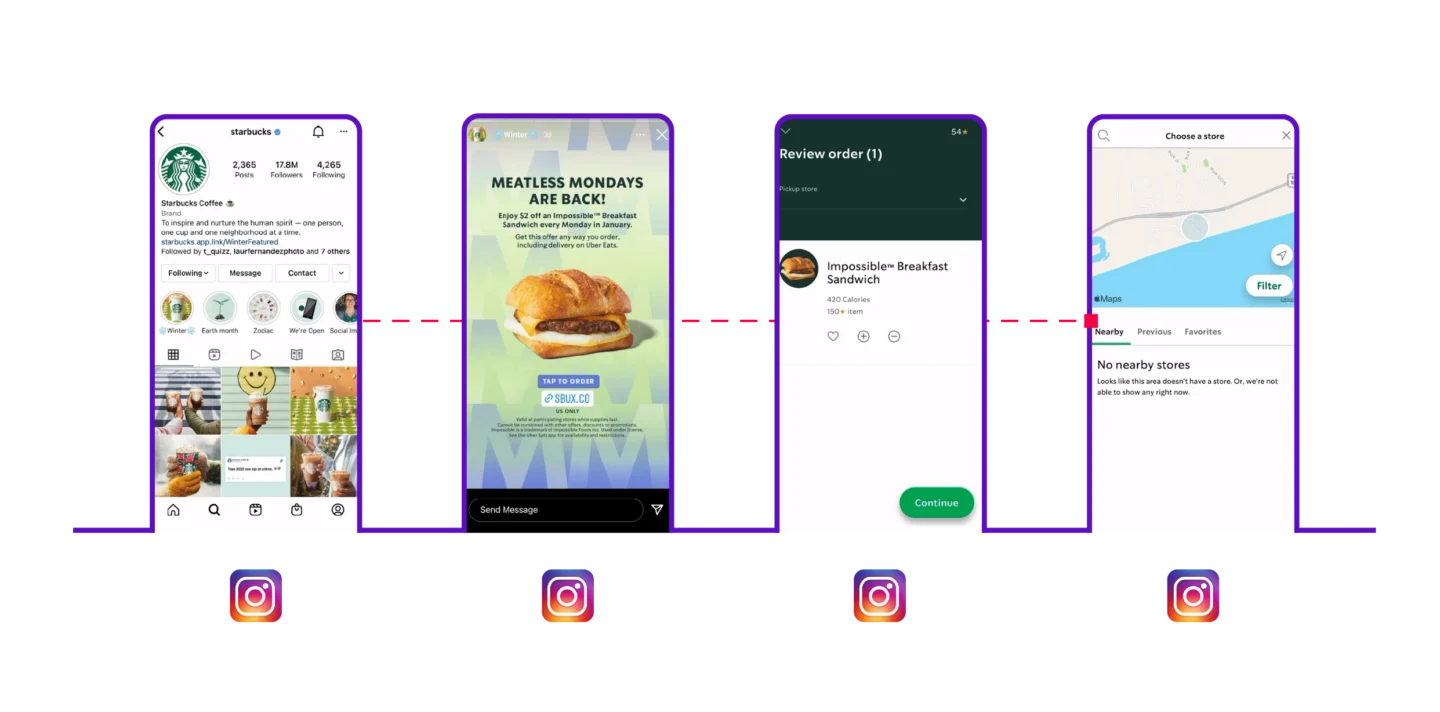
If an influencer promotes a specific product, the post-click experience should surface that product, not a generic homepage. Starbucks does this well: Users can add store products directly to their cart from Instagram, Twitter, email, or text, making a purchase just one or two taps away.
2. Use referral and incentive systems to drive intentional sharing
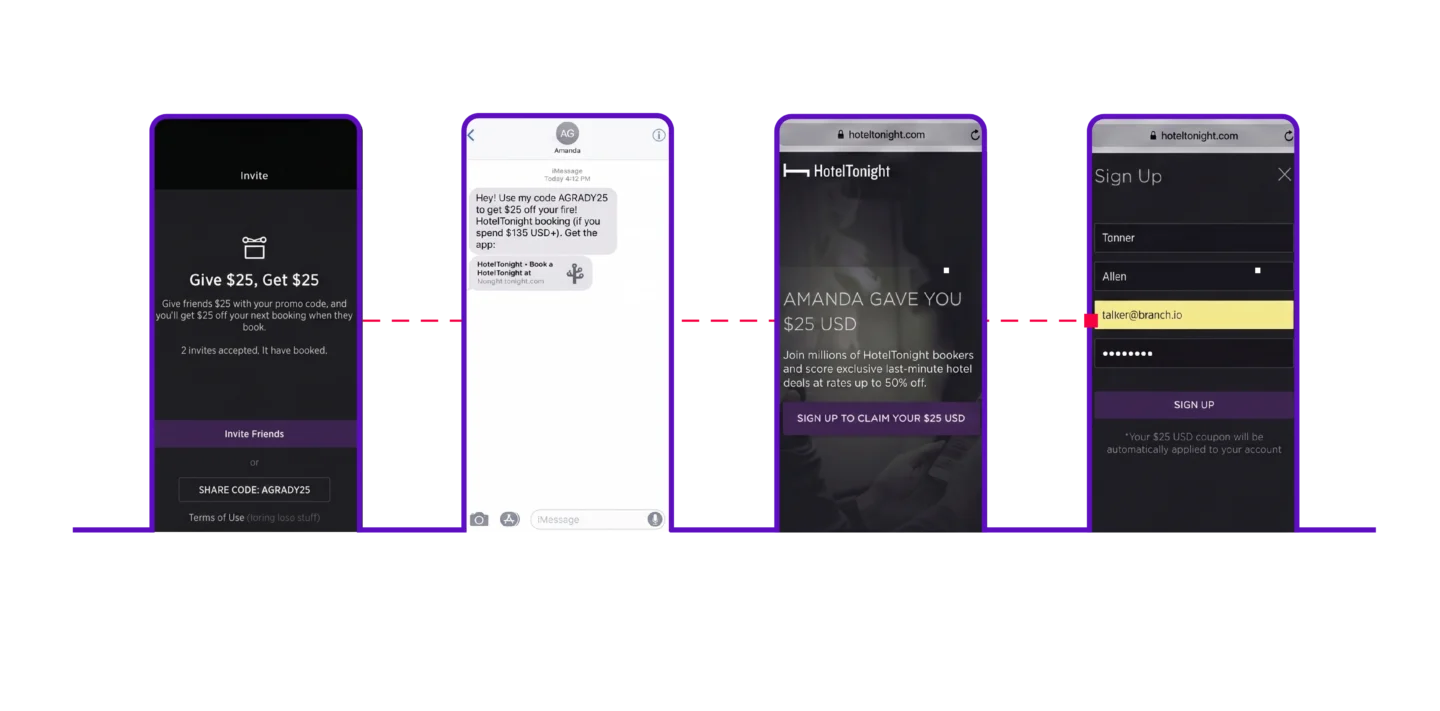
Clear rewards like in-app credits, exclusive access, or discounts work well. Branch data shows that incentivized referrals drive a conversion rate of around 70%, and offering a double-sided incentive that rewards both the sender and recipient pushes conversions even higher. Keep the value exchange obvious so users understand why sharing benefits them. HotelTonight personalizes share codes to include part of the referring user’s name, a small detail that signals to recipients the link isn’t spam and meaningfully improves conversion. When a friend clicks and signs up, they install the app and immediately see the personalized incentive confirmation.
3. Assign each influencer or affiliate a unique, trackable deep link
Links should route users from platforms like Instagram, TikTok, or YouTube directly into your app, or to the app store if it isn’t installed yet. The opportunity here is bigger than most brands realize. As Reed Kuhn, Branch’s senior director of global business strategy, noted: “Influencers and affiliates are huge right now for marketing, and they’re high ROI. Imagine what you could be doing if they were leveraging deep links for that content.”
A fashion influencer posting on Instagram, for example, can share a link to a specific product that takes followers straight to that item’s page in the app.

Technical requirements for links built to drive downloads include:
- Unique link parameters for each partner or campaign to enable granular attribution
- Cross-platform compatibility across iOS, Android, and web
- Deferred deep linking to preserve content context through the install process
- Fallback routing to handle unsupported platforms or app versions
- Real-time analytics to monitor performance as campaigns run
Platform constraints require planning too. Instagram and TikTok limit external linking, which means link-in-bio strategies and platform-specific formats are often necessary. Your link infrastructure needs to adapt to those constraints without sacrificing attribution accuracy. Building that flexibility in from the start is easier than retrofitting it later.
Measuring and tracking viral link performance for apps
Attribution is what separates a viral link strategy from a viral link experiment. Without it, you can’t identify which channels drive installs, which partners deliver ROI, or where users drop off in the sharing funnel.
The foundational metrics for viral link campaigns include:
- Install attribution by source
- Click-to-install conversion rate
- Downstream engagement events (purchases, subscriptions, session depth)
- Viral coefficient (K-factor), a measure of how many new users each existing user brings in through sharing
The viral index provides a useful reference for calculating K-factor and setting growth benchmarks. In simple terms, a K-factor above 1 indicates that your app is growing organically through user sharing.
Attribution methodology matters as much as the metrics themselves. Tracking organic and viral installs requires distinguishing between installs driven by sharing activity and those driven by other channels. Otherwise, ROI calculations will misattribute growth and lead to poor budget decisions.
For ROI, connect each viral link to its downstream revenue contribution. If a referral link generates 500 installs and 20% convert to paying users at an average order value of $40, that link contributed $4,000 in revenue. Compare that against the cost of the incentive or partner fee and you have a clear picture of campaign profitability.
Best practices for sustaining viral link success
Refresh your content hooks before they plateau
What drives shares in one quarter may not resonate in the next, especially in fast-moving verticals like gaming, fintech, or social apps. Monitor share rates by content type and rotate in new hooks before performance declines.
Recalibrate incentives to attract quality users
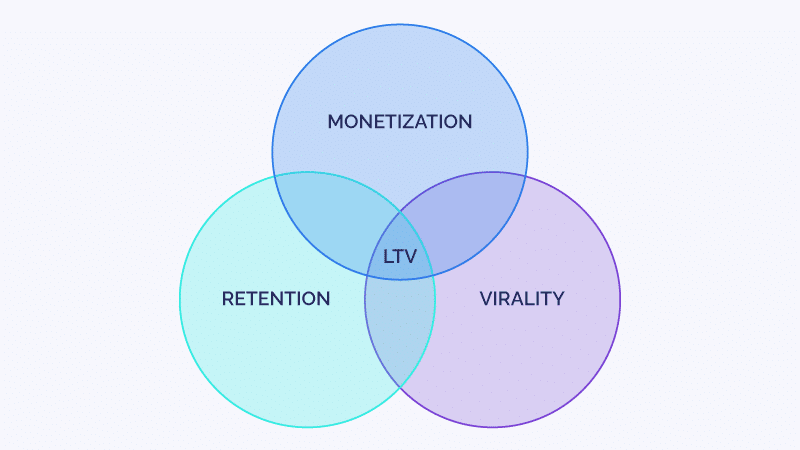
Rewards that are too low won’t motivate sharing. Rewards that are too high attract users who churn. Analyze the lifetime value (LTV) of referred users and adjust incentives to optimize for quality over volume.
Align your sharing loop with user behavior
A fitness app’s users share achievements. An e-commerce app’s users share products and deals. A gaming app’s users share scores and challenges. Build sharing mechanics around those natural behaviors so the loop reinforces itself.
Optimize for engagement, not just installs
Users who don’t engage inflate acquisition metrics without improving business outcomes. Engagement is what drives long-term growth.
How Branch powers viral link campaigns at scale
Viral sharing breaks down when links misroute users, attribution gets lost, or tools can’t keep up with cross-platform complexity. Branch handles all of it in one platform so every share stays traceable and holds up in 6,000+ edge cases across walled gardens, Private Relay, and iOS updates.
Explore Branch Engagement to build, measure, and scale viral link campaigns.