Key takeaways
- Once a shopper is in your app, the experience does a lot of the retention work for you: saved payment info, richer functionality, and a faster, more personalized experience than your website can offer.
- App shoppers generate 3x more revenue per user than web-only shoppers according to Branch data.
- Getting someone into your app is step one. Your owned channels, including QR codes, web-to-app banners, social, and email, are what keep driving them back in.
Every retailer wants a shopper to convert once. The bigger win is getting them into your app, because once they’re there, the experience starts doing the retention work for you. Payment info is already saved, checkout is faster, and features like personalized recommendations, loyalty tracking, and exclusive access work better than anything your website can offer.
That experience gap is why app users tend to generate 3x more revenue and stick around longer than web-only shoppers. But getting someone to install is only half the job. The other half is using the channels you already have to route shoppers back into the app instead of letting them drift back to your site (or a competitor’s).
Here are five tactics to encourage repeat engagement and long-term retention.
1. Display QR codes for seamless offline-to-app engagement
QR codes are a low-lift, high-reward strategy that bridge offline and online experiences. By strategically placing QR codes on in-store signage, shopping carts, or checkout counters, you can:
- Convert foot traffic into app users.
- Direct shoppers to specific products or categories within your app, such as restocked items or post-holiday sales.
- Attribute installs and app activity to offline campaigns to gain insights into what drives engagement.
For example, during in-store returns, customers could scan a QR code to access a discount on their next purchase via your app. This approach encourages downloads, highlights app-exclusive features, and incentivizes future purchases, making it a win-win for engagement and retention.
Branch QR codes make implementing this strategy even easier. They allow you to:
- Customize QR code creative and link data to match your brand look and feel.
- Easily update routing destinations to keep your campaigns fresh — even on printed materials.
- View downstream activity from QR codes in one place to help you refine engagement and retention strategies.
See how Max Fashion drives double-digit growth with in-store QR codes >

2. Deploy targeted web-to-app banners
Web-to-app smart banners provide a personalized and frictionless way to connect your web and app experiences. Use them to increase app engagement by:
- Converting web visitors into app users with app-only deals or promotions.
- Routing existing app users back into the app when they land on your website.
- Moving users who complete a purchase on the web to your app with a post-purchase call to action (CTA) to install.
Branch Banners makes it simple to create, launch, and test banner campaigns without developer resources. You can use pre-built templates and intuitive tools to:
- Personalize banners based on user behavior and context, like funnel stage, to show shoppers the most relevant CTAs.
- Streamline campaign management with an easy-to-use interface that lets you design, deploy, and adjust banners quickly. You can also run A/B tests, allocate traffic to different variations, and compare version history.
- Preserve browsing context through the app install process via deferred deep linking to create a seamless transition.
- View detailed performance analytics, including down-funnel events, conversion rates, and long-term trends.
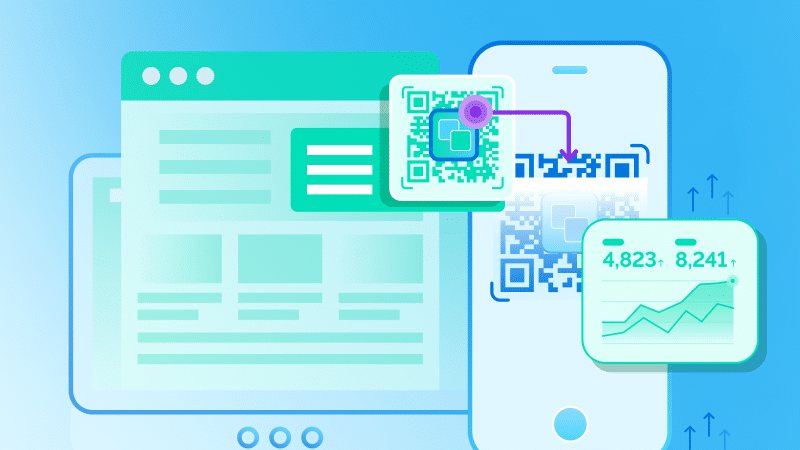
You can extend this approach to desktop, too, by displaying Desktop Banners on key webpages. If visitors meet predetermined audience targeting rules, they’ll see a custom interstitial and QR code prompting them to download the app. Unlike generic QR codes, a Branch QR code will route them to relevant in-app content through direct or deferred deep linking while preserving attribution data for accurate performance tracking.
Both mobile and desktop web banners are tried-and-true approaches to push users to your most valuable platform, increase average revenue per user (ARPU), and raise LTV. Plus, they’re an effective strategy to have in place ahead of peak shopping seasons.
See how retailer END. transformed web traffic into 44% revenue growth >

3. Deep link on social media to break out of walled gardens
Many holiday shoppers discover your brand through social media but get stuck in “walled gardens” of in-app browsers. Embedding deep links into your social profiles and posts:
- Automatically directs users from social platforms to your app’s homepage or a relevant product page.
- Drives conversions with links to targeted post-holiday offers, like clearance collections or exclusive discounts.
- Tracks and attributes the performance of social campaigns to understand ROI.
For instance, a deep link in a post-holiday social post could lead directly to a curated collection of clearance items or holiday best sellers. These links bridge the gap by helping you break users out of these low-engagement environments and increase your campaign’s impact.
Branch deep links level up your organic social efforts with:
- Deferred deep linking to direct new app users to the right content after install.
- Reliability on every platform, meaning links work when you use TikTok on iOS, Instagram on Android, and every other combination you can imagine.
- Branded short links that reflect your brand and boost user confidence.
- Link-level insights to help you track the effectiveness of each campaign, post, or piece of influencer content.
You can also create seamless social shopping experiences with features like auto-applied promo codes. This removes friction for shoppers who are coming from post-holiday social campaigns to your app. With 42% of Gen Z shoppers and 26% of millennials turning to social media for holiday purchases, post-holiday is the perfect time to convert followers into repeat customers.
See how PrettyLittleThing uses social media to drive mobile growth >
4. Personalize email-to-app campaigns
Email is a cornerstone of mobile growth: It’s the fourth-most-used app acquisition channel and the most-used retention channel. Maximize the potential of shoppers in your email database by:
- Highlighting limited-time offers, such as extended sales or restocked items, then deep linking users to the corresponding in-app page to take action.
- Reengaging inactive users by deep linking from emails with personalized recommendations, abandoned cart reminders, or unpurchased wishlist notifications. For example, automatically adding items to the cart in-app when users click through can streamline their experience and drive conversions.
- Promoting app-exclusive perks, like free returns or loyalty rewards.
Although email is incredibly effective, most brands leave conversions on the table because their email links direct users to the website or, worse, their Universal Links break when email service providers (ESPs) wrap them for tracking. By plugging Branch into your existing ESP, you can:
- Avoid the frustrating trade-off between deep linking and click-tracking data. Branch preserves click data and supplements it with rich cross-platform email attribution so you can view app installs, opens, purchases, and other down-funnel events.
- Simplify link creation and workflows for email teams. Branch automatically converts links into multi-platform deep links, meaning you don’t have to manually create each email link.
If your email campaigns aren’t growing your app userbase — or you simply don’t have the data to see how your emails drove down-funnel conversions — start with your linking strategy. Email engagement is key to nurturing new shoppers and converting them into loyal customers.
See how Stadium Goods drove a 268% jump in email revenue >

5. Use paid ads for app reengagement
Owned channels aside, reengagement ad campaigns can still be a cost-effective way to bring back users who downloaded your app to make a purchase but have since become inactive:
- Entice recent installers with limited-time deals. Use the peak holiday shopping season and subsequent events like Valentine’s Day, Easter, or Ramadan to draw shoppers back in.
- Reintroduce your app’s value by highlighting app-only features.
The key to high-performing reengagement ads is the right audience segmentation. The more specific the better. Branch Engagement Builder simplifies audience creation with:
- Omni-channel list building so you can create audiences based on ad exposure across multiple networks, app and web interactions, past purchases, or in-app behaviors.
- Privacy-conscious targeting. It’s no secret that App Tracking Transparency (ATT) on iOS impacted reengagement. Branch includes only users who have opted in through ATT to support end-user privacy and supports AdAttributionKit reengagement campaigns.
- Direct connections to your ad partners so you can automatically upload audience lists without the extra hassle of manual work.
As with any investment in paid campaigns, you need to be able to track ROI. Ads attribution ensures you can accurately identify app engagement and subsequent conversions driven by the campaign.
Get tips for using paid ads to drive app reengagement >
Get shoppers back into the app (where they’re worth more)
Every one of these tactics takes a shopper who’s on your site, in your inbox, on social, or standing in your store, and directs them back to the app. Branch linking and attribution make it easy to build these entry points and prove they’re working. Want to see how it works? Request a demo.