

User acquisition (UA) is the process of bringing new users to a product through paid and organic channels. For mobile apps specifically, it means driving installs from users who activate, retain, and generate enough revenue to justify what you spent to reach them.
UA today looks different from two years ago, and three structural pressures explain why.
- Rising costs, shrinking signal. Costs per mille (CPMs) and costs per install (CPIs) keep climbing while Apple’s App Tracking Transparency (ATT) prompt has gated identifier for advertisers (IDFA) access to significantly reduced opt-in rates across many app categories and verticals. Much of the deterministic targeting data that once justified those CPMs is no longer consistently available for the majority of iOS users, and the aggregate postbacks of SKAdNetwork (SKAN) don’t replace it one-for-one.
- Channel complexity from AI discovery. Users no longer just search the App Store, Google Play, or social media. AI search engines are fielding “what’s the best app for X” queries, fragmenting the discovery surface and forcing UA teams to think beyond traditional storefronts and paid social.
- The measurement gap. Most apps can tell you what they spent on UA. Far fewer can connect that spend to the users who actually stick around and generate revenue. Install counts look healthy while lifetime value (LTV) and customer acquisition cost (CAC) quietly break.
Successful UA means wiring every channel and campaign to measurable business outcomes. This guide covers how to do that: channels, metrics, strategy, and the measurement infrastructure that holds it together.
Why does user acquisition matter for app growth?
The goal for UA is not simply to drive installs but to use measurable marketing channels and campaigns to acquire high-quality users who activate, retain, and generate long-term revenue. Two shifts are reshaping how that works.
AI-driven UA is where the spend is going. Google App Campaigns, Meta Advantage+, and Apple Search Ads have consolidated toward AI-automated bidding and creative selection. UA managers are spending less time manually tweaking bids and more time feeding these systems the right conversion events, audience inputs, and creative variants so the algorithms can optimize toward actual business results rather than install volume.
Privacy is structurally changing what UA teams can see. Apple’s ATT gates IDFA access, which significantly reduced deterministic user-level visibility. SKAN is Apple’s consent-agnostic attribution framework that runs regardless of ATT status, delivering aggregate, privacy-preserving install postbacks alongside whatever IDFA-based attribution remains available when users have opted in. Teams that built their measurement stack on granular device-level tracking are restructuring measurement around aggregated SKAN postbacks, modeled attribution, and first-party signal they actually own.
UA channels compared: Paid, organic, and owned
Every UA channel operates differently, serves distinct audiences, and requires its own measurement framework. This piece focuses on mobile app UA specifically, so while the strategic principles apply broadly, the channels, tools, and benchmarks covered here are for app-based businesses on iOS and Android.
Paid acquisition channels
Paid UA today splits into two buying models, and the difference matters for both budget allocation and team structure.
Platform-managed AI channels: Apple Search Ads, Google App Campaigns, Meta Advantage+. These platforms run bidding and targeting through their own machine learning, which has shifted marketing teams’ roles from manual optimization to signal optimization. They feed the system the right conversion events, audience inputs, and creative variants, then let the algorithm find the users most likely to convert.
- Upside: scale and efficiency.
- Downside: reduced control, and a hard dependency on conversion tracking clean enough to actually train the algorithm.
Programmatic UA driven by a demand-side platform (DSP): Moloco, Liftoff, AppLovin. This model involves algorithmic buying across mobile ad exchanges, with granular control over inventory, bidding strategies, and audience targeting. It’s the best fit when you have specific performance goals, niche audiences, or the technical infrastructure to support real-time bidding optimization.
- Upside: control and transparency the AI channels won’t give you.
- Downside: more hands-on management and deeper attribution integration to measure true incremental lift.
Both models demand clean attribution data. Without it, you’re optimizing blind.
Organic acquisition channels
Organic UA encompasses every channel where users discover your app without paid promotion: App Store and Google Play search, category browsing, editorial features, word-of-mouth, and increasingly, AI-powered search engines fielding queries like “what’s the best app for budgeting.”
App store optimization (ASO) remains the foundation. Your app’s title, subtitle, keyword field, screenshots, and preview video directly influence whether a user converts after discovering you in search results. ASO isn’t set-it-and-forget-it. Algorithm changes, competitor updates, and seasonal search trends mean your metadata needs regular testing and refinement. Even a 10% lift in install rate compounds across every organic impression.
What’s changed recently is the fragmentation of organic discovery surfaces. Users are asking ChatGPT, Perplexity, and Google’s AI Overviews for app recommendations, which means your organic strategy now extends beyond traditional ASO into ensuring your app appears in AI-generated results.
Paid and organic are complementary, not competing. Paid app installs can significantly boost organic downloads by improving your app’s ranking signals, creating a flywheel effect where paid spend amplifies organic performance.
Owned and earned channels
Owned channels, like your website, email lists, push notifications, SMS, and in-app messaging, are primarily retention and reengagement tools rather than acquisition channels in the traditional sense. They’re most valuable after the install, moving users toward activation and keeping them engaged long enough to generate revenue.
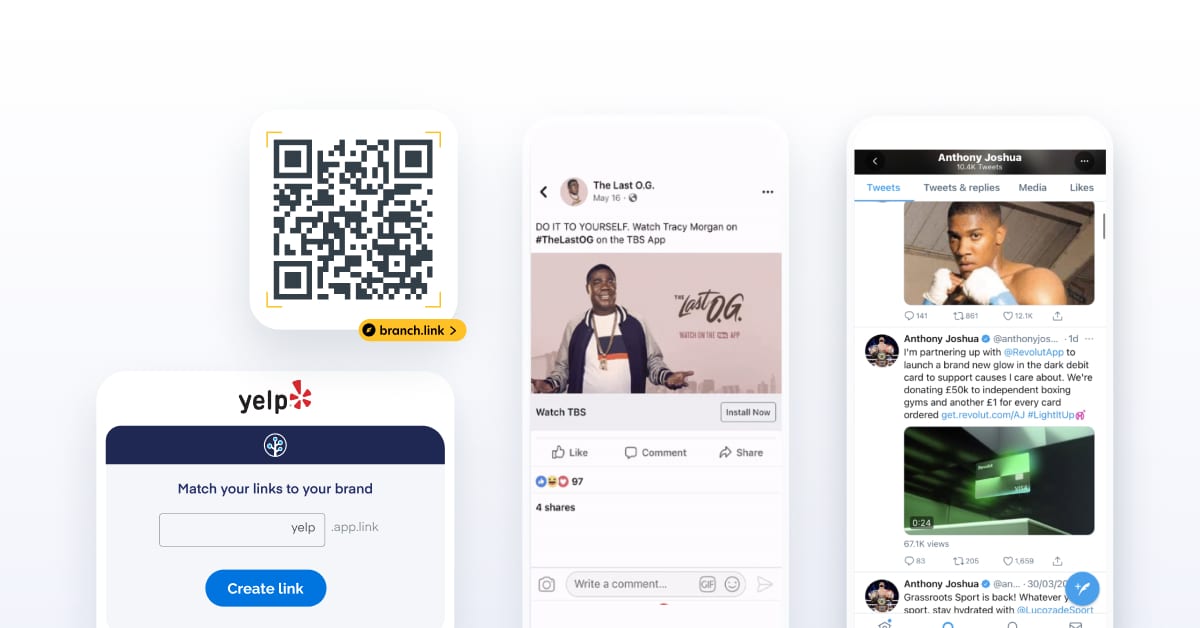
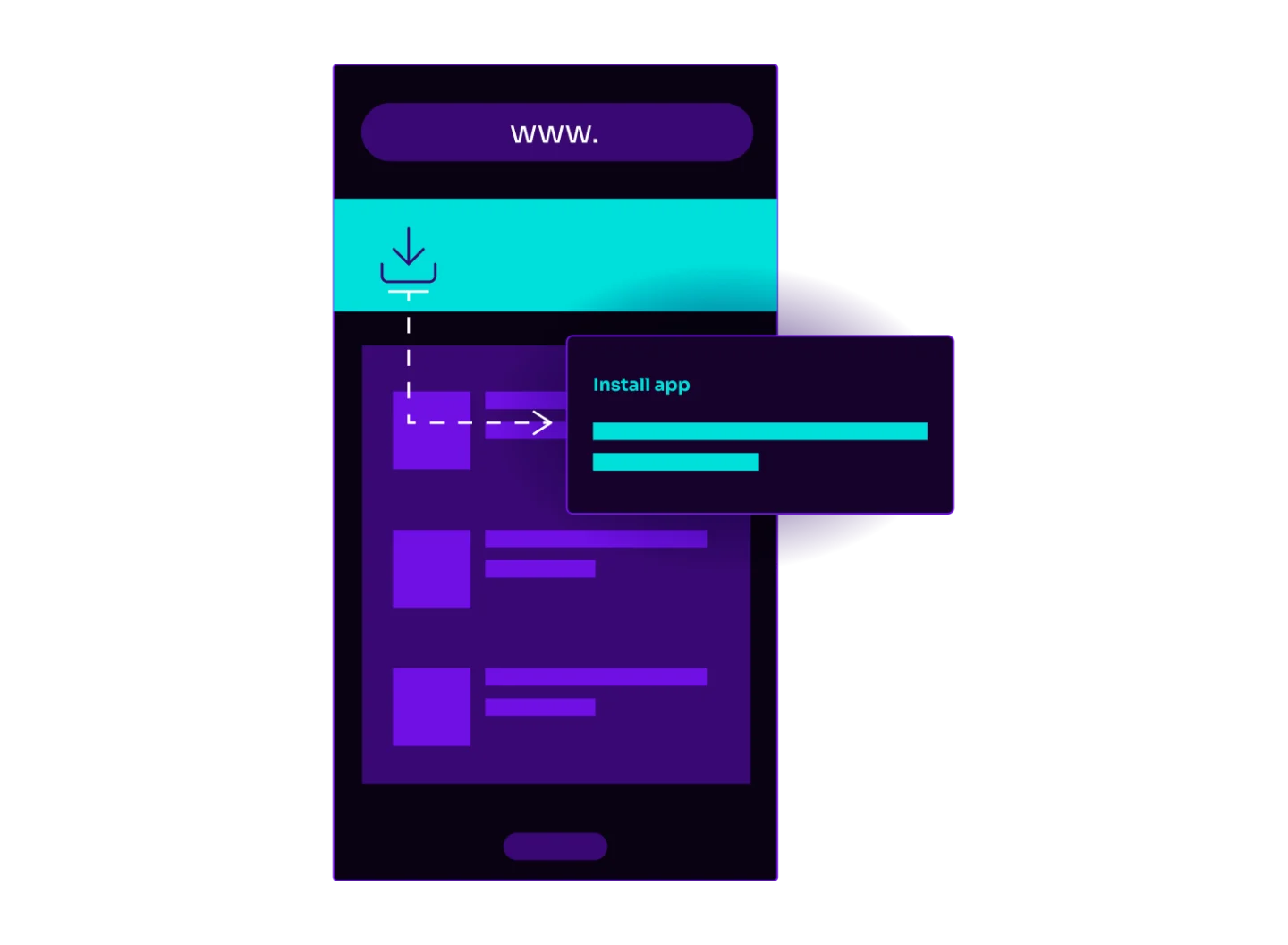
Owned channels can drive acquisition in certain scenarios. One example is website-to-app conversion: A user lands on your mobile website and a well-placed banner or deep link converts them into an app install. Another example is referral programs: Existing users become acquisition drivers when you give them a structured incentive to invite others. Both require deep linking technology to work well. Without it, the handoff from web or message to app creates friction that kills conversion.
Earned channels, like organic reviews, press coverage, word-of-mouth, and influencer mentions, are genuine acquisition drivers. They bring in net-new users who arrive prevalidated by someone they trust, which is why earned users typically retain better than paid. Attribution is harder here, but proxy metrics like referral conversion rates and organic install lift following PR placements can help quantify impact and justify investment.
Essential user acquisition metrics and what they tell you
Cost-based metrics (CPI, CAC, ROAS)
Three cost-based metrics anchor most UA reporting:
- Cost per install (CPI): what you paid to get someone to download your app.
- Customer acquisition cost (CAC): what you paid to turn that download into a user who completed a meaningful action, like signing up, making a purchase, or subscribing.
- Return on advertising spend (ROAS): revenue divided by ad spend, showing whether your campaigns are paying back.
CPI looks at the top of the funnel, ROAS looks at the bottom, and neither tells you which channels are delivering users who actually convert and retain. A $2 CPI from Apple Search Ads might outperform a $0.50 CPI from a programmatic network if the Apple Search Ads users activate at 3x the rate and stick around twice as long. You need to connect cost metrics to downstream behavior, or you’re optimizing for the wrong outcome.
Track CAC by channel, not just blended CAC across all spend. Segment ROAS by cohort and time window: Day 7 ROAS will look very different from day 90 ROAS, and the channels that win early often aren’t the ones that win long term.
In-app conversion and activation metrics
An install alone does not represent meaningful growth. A user is someone who completed the core action that unlocks value in your app: created an account, added payment info, completed onboarding, made a first purchase, or booked a service. Install-to-activation rate measures how many downloads turn into actual users, and it’s one of the highest-leverage metrics in your entire UA program.
Time to first key action tells you how quickly new users reach that activation moment. The faster they get there, the more likely they are to retain. If your median time to activation is 48 hours and your day 1 retention is 25%, you’re failing to move a large portion of new users toward activation before they even experience what your app does.
Event-level attribution by channel connects every downstream conversion back to the campaign, ad set, and creative that drove the install. SKAN limits what you can see at the user level, and modeled attribution introduces uncertainty. But the teams that invest in robust event tracking and feed those signals back to their ad platforms are the ones whose AI bidding actually works.
Quality and retention metrics (LTV, day 1/7/30 retention)
Lifetime value (LTV) is the total revenue a user generates over their relationship with your app. It sets the ceiling for what you can afford to spend on acquisition. If your LTV is $50 and your CAC is $45, you have $5 of margin to work with, and that margin disappears the moment retention dips or a platform raises CPMs.
Retention is the leading indicator of LTV, and each window tells you something different:
- Day 1 retention tells you whether your onboarding works.
- Day 7 retention tells you whether your core experience delivers value.
- Day 30 retention tells you whether you’ve built a habit.
Apps with strong day 30 retention can afford to pay more for installs because those users generate compounding revenue over time. Apps with weak retention are stuck in an unsustainable acquisition cycle, constantly churning through cheap installs with high churn rates that never pay back.
The LTV:CAC ratio is the gold standard for UA efficiency. A ratio of 3:1 or higher means each user generates enough revenue to justify the cost of acquiring them with room to spare. Segment retention by channel and cohort: If your organic users retain at 50% on day 7 and your paid users retain at 20%, you either have a targeting problem or a post-install experience problem. Either way, you’re spending money to acquire users who don’t value what you built.
Building your user acquisition strategy: A framework for any app
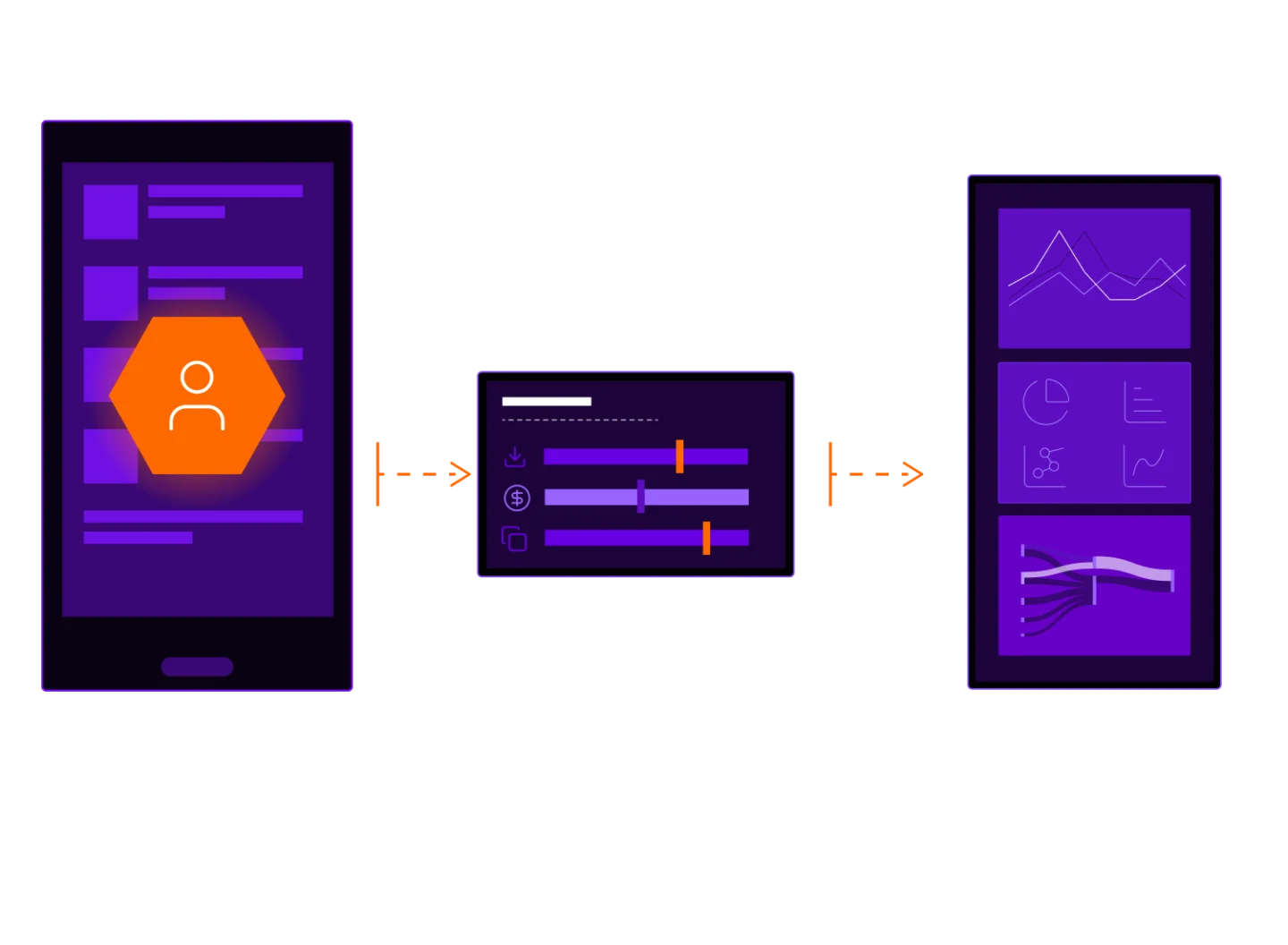
You need to build a strong UA strategy on a repeatable framework that connects who you’re targeting, where you’ll reach them, and how you’ll know if it’s working.
Know your target user before you pick your channels
Your target user profile should answer three questions: What problem does your app solve for them, what behaviors signal they’re likely to convert and retain, and where do they spend time before they discover or evaluate solutions like yours?
Articulate your value proposition in terms of outcomes, not features. Your target user doesn’t care that your app has “AI-powered recommendations.” They care that they’ll find the right workout in under 30 seconds, or save $200 on their next international transfer. Frame your value proposition around the measurable result your user will experience.
Match your channel mix to your business model
A subscription app with high LTV and long sales cycles can afford to invest in brand-building channels like content marketing and organic search, while a transactional app with thin margins and fast payback windows needs performance channels that convert immediately. One common mistake is copying a competitor’s channel mix without understanding whether your economics can support it.
Three business-model archetypes show how this plays out:
- E-commerce and marketplace apps thrive on paid social and Google App campaigns because these platforms excel at intent-based targeting and dynamic product ads.
- Subscription and software as a service (SaaS) apps benefit from a blended approach that includes paid search, content-driven organic acquisition, and owned channels like email nurture sequences.
- Gaming and entertainment apps often see the best results from programmatic UA and platform-managed AI channels that can optimize toward in-app events like level completion or ad views.
Your mobile user acquisition channel mix should reflect both where your users are and how they make decisions. Start with the channels your business model can afford today, then expand as your unit economics improve.
Build your measurement infrastructure before you scale
Your UA strategy is only as good as the data infrastructure behind it. Start by implementing a mobile measurement partner (MMP) that can stitch together user journeys across paid, organic, and owned touchpoints, even when deterministic device-level data isn’t available.
Define your key conversion events and ensure they’re instrumented consistently across your analytics stack, attribution platform, and ad network integrations. These events become the feedback loop that powers AI-driven campaign optimization on platforms like Google App campaigns and Meta Advantage+.
Run structured experiments on creative variants, audience segments, and bid strategies, and give each test enough time and budget to reach statistical significance.
Branch is the leading mobile linking and measurement platform, with deep linking and attribution built on the same foundation. That means we stitch every install, open, and downstream conversion to the campaign that actually drove it, across paid, owned, and earned channels, so you stop optimizing for vanity metrics and start optimizing for growth.
How to evaluate and optimize your user acquisition strategy over time
UA optimization is less about finding the perfect channel mix and more about building a system for catching problems before they compound.
Start with payback by channel. Track LTV:CAC at the 30 and 90-day marks for each channel separately, not blended across all spend. A channel that looks efficient on day 7 can look very different on day 90 when you account for churn. If a channel’s cohorts consistently underperform your LTV:CAC target at 90 days, reallocate before the losses compound.
Then look at retention by cohort. Segment day 7 and day 30 retention by acquisition channel and creative. If users from one channel retain at half the rate of another, you either have a targeting problem, where you’re reaching the wrong users, or a post-install experience problem, where the ad promises something the app doesn’t deliver. Both are fixable, but only if you’re measuring retention at the channel level rather than averaging across your entire install base.
Audit attribution regularly for signal gaps: web-to-app conversions not stitched to the right campaign, cross-device journeys your stack can’t track, and organic installs actually driven by paid spend but showing up as unattributed. These gaps quietly corrupt the signals feeding your ad platform algorithms, which means your AI bidding is optimizing toward an incomplete picture of what’s working.
On testing, structure experiments around one variable at a time and define your success metric before you run the test, not after. Tests without a predefined success metric tend to produce justifications rather than decisions.
Branch Performance connects spend to revenue across every paid, owned, and earned channel in a single view, so gaps surface before they skew your optimization decisions. See where your budget is actually going, and where it should go next.
Frequently asked questions about user acquisition
User acquisition is a specific discipline focused on attracting and converting new users to your app. Growth marketing covers the entire user lifecycle: activation, retention, monetization, and referral. UA owns the top of the funnel through paid campaigns, organic optimization, and owned channels; growth owns what happens after the install. The most effective organizations wire these two together: UA strategy informs retention tactics, and retention data feeds back into UA targeting, so you stop optimizing for install volume and start optimizing for business outcomes.
There is no universal benchmark, because ideal UA budgets depend heavily on your business model, monetization strategy, and target growth rate. Most early-stage apps start with controlled testing budgets designed to establish baseline CAC, retention, and LTV benchmarks before scaling spend aggressively.
Perfect attribution doesn’t exist, but you can get close enough to make good decisions. Start by implementing an MMP that combines SKAN postbacks, probabilistic modeling, and any first-party signals you own into channel-level performance estimates. Treat those estimates as directional, not definitive. Layer in cohort analysis, like day 1, 7, and 30 retention by channel, to validate whether the users each source delivers are actually sticking around. Run incrementality tests periodically to confirm that paid spend is driving net-new users rather than capturing organic demand that would have converted anyway. Branch unifies paid, owned, and earned attribution into a single measurement view so you can make those calls from one place rather than reconciling across disconnected systems.