


Attribution models determine which marketing efforts get credit for driving growth. Get them right and you know where to invest, what to cut, and which channels are actually moving the needle. Get them wrong and you’re optimizing against numbers that don’t reflect reality and scaling channels that look effective in platform dashboards but underperform on actual revenue.
This guide walks through what attribution models are, how different models assign credit, and how to choose and validate an approach that fits your app.
What is an attribution model in app marketing?
In app marketing, an attribution model is the rule set that decides how you connect conversions, like an install, sign-up, purchase, or subscription renewal, back to the marketing touchpoints that influenced them. It determines which channels, campaigns, and creatives get credit for the outcomes you care about.
Every time a user interacts with your brand on the path to install and beyond, those interactions form a chain of touchpoints. Your attribution model decides how to distribute credit across that chain. For example, if a user first taps a TikTok ad, later clicks a search ad, and finally installs after visiting your website, your attribution model decides whether the install is “owned” by TikTok, search, both, or all three interactions.
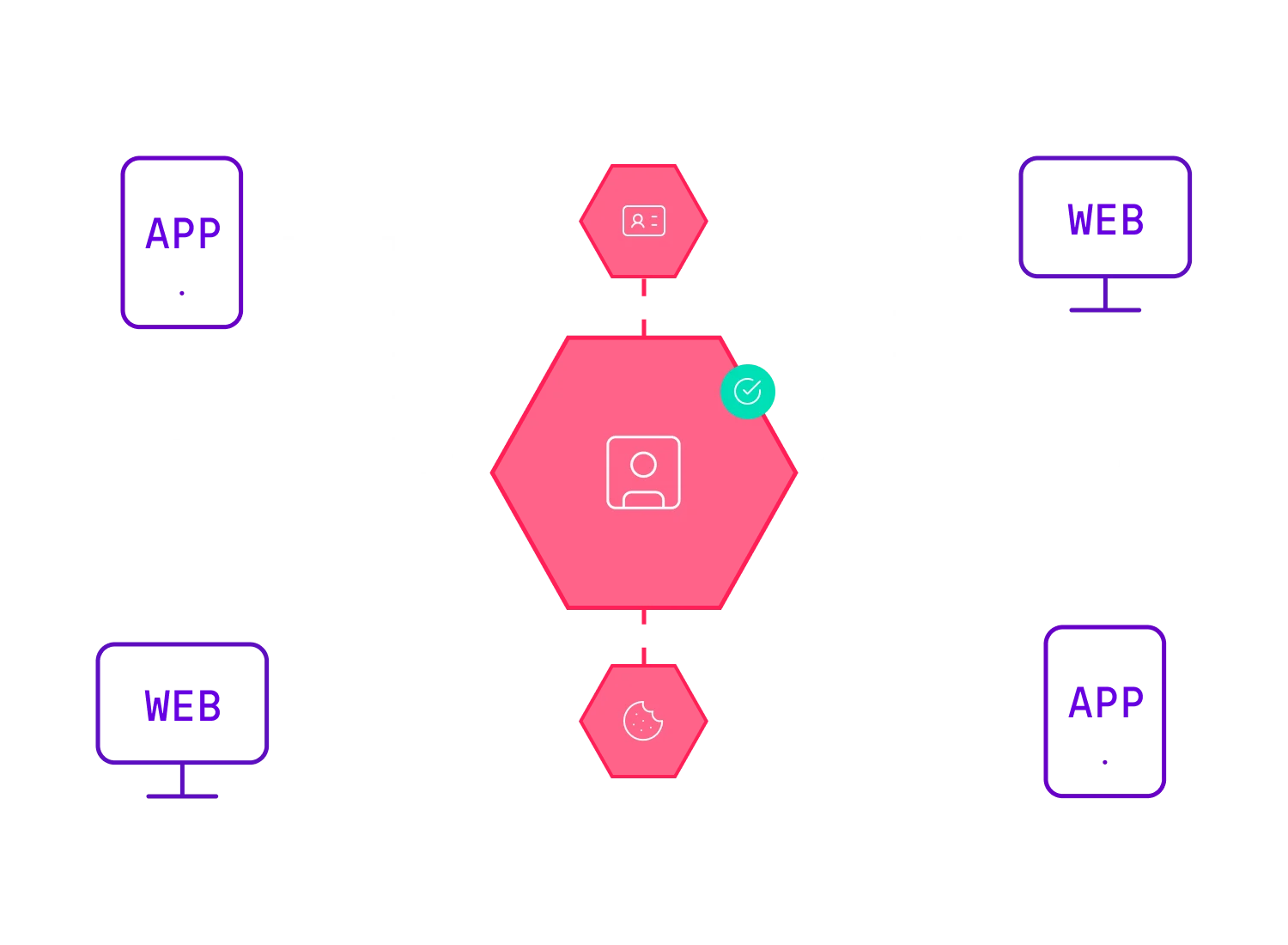
Your attribution model influences:
- Budget allocation: Which channels you scale up or cut back
- Channel strategy: How you balance awareness, retargeting, and lifecycle campaigns
- Performance evaluation: How you judge partners, networks, and creative concepts
Choosing a model that matches your app’s goals and user behavior is what turns scattered data into a clear picture of what’s actually driving growth.
Attribution vs. attribution model vs. incrementality
Attribution is the measurement process that connects a conversion to the marketing touchpoints that came before it. Good attribution systems connect events across devices and platforms so you can see a continuous journey instead of isolated interactions.
An attribution model is how you interpret that journey, setting the rules that determine how much credit each touchpoint receives. With the same raw data, a last-click model might give all credit to the final ad before install, while a multi-touch model might spread credit across awareness, retargeting, and brand search interactions.
Incrementality answers a different question: What truly changed because of your marketing? Incrementality testing uses experiments and control groups to assess whether a conversion would have happened anyway without the campaign. It focuses on causal impact instead of correlation.
In practice, attribution models anchor your day-to-day reporting and optimization, while incrementality tests validate that the channels receiving credit are actually creating lift. The strongest measurement strategies use both.
Attribution model types and how credit is assigned
Attribution models fall into two broad categories:
- Approaches that give credit to a single touchpoint
- Approaches that share credit across multiple interactions.
Each model emphasizes different parts of the journey and works best for different use cases.
Single-touch models: First-click and last-click
Single-touch attribution models give full credit for a conversion to one interaction in the journey. They’re simple to understand and easy to operationalize, which is why they remain common in app marketing. Single-touch attribution centers around two types:
- First-click attribution assigns credit to the earliest tracked interaction. If a user first taps a paid social ad, later sees a display remarketing ad, and then installs, first-click gives all the credit to paid social. This model is useful when you’re focused on which channels introduce new users.
- Last-click attribution assigns the conversion to the final touchpoint before the app install or in-app action. Many ad networks optimize and report on this standard, so last-click often becomes the default for performance campaigns.
The limitation is that single-touch models ignore everything between the first and last touch. This means closing channels like search and retargeting tend to look more valuable than they are, while upper-funnel and mid-funnel channels that do real work go undercredited.
Multi-touch models: Linear, time-decay, and position-based
Multi-touch attribution models distribute credit across several touchpoints, recognizing that most app users engage with multiple campaigns and channels before converting. There are three main types:
- Linear attribution spreads credit evenly across every tracked touchpoint. This model gives you a sense of how all participating channels contribute, but it treats a low-intent early impression the same as a high-intent bottom-funnel click.
- Time-decay attribution increases the weight of interactions as they get closer to the conversion event. Early touches still get credit, but the interactions nearest to install or purchase receive a larger share. Time-decay attribution is particularly useful for apps with shorter consideration cycles where recent touches genuinely drive the decision.
- Position-based attribution (often called U-shaped) gives the largest share of credit to the first and last interactions, with the remainder split across touches in between. It recognizes the outsized importance of initial discovery and the final nudge to convert while still valuing mid-funnel activity.
Linear is the most practical starting point for most app marketing teams. Time-decay and position-based become more useful as your dataset grows and you need more nuanced views of how channels contribute at different funnel stages.
Rules that change outcomes: Lookback windows and reattribution
Lookback windows define how far back in time a touchpoint is eligible for credit. You might decide a click can influence an install for up to seven or 30 days, while a view-through impression is only eligible for a shorter period. Shorter windows favor performance channels that drive fast actions; longer windows acknowledge that in categories like travel or finance, users research over days or weeks before installing.
Reattribution logic controls how you credit campaigns when existing users return to your app and convert again. Most teams require a user to be inactive for a defined period before a reengagement campaign can claim credit. Otherwise, you risk overstating the impact of campaigns that are simply reaching users who would have come back anyway.
Both settings have an outsized effect on how your channels appear to perform. Generic defaults often distort results. Getting these right means your attribution model reflects how your users actually behave, not how the platform assumes they do.
How to choose the best attribution model for your app
Choosing an attribution model starts with understanding what data is actually available to you because the model you can run effectively depends on your platform environment.
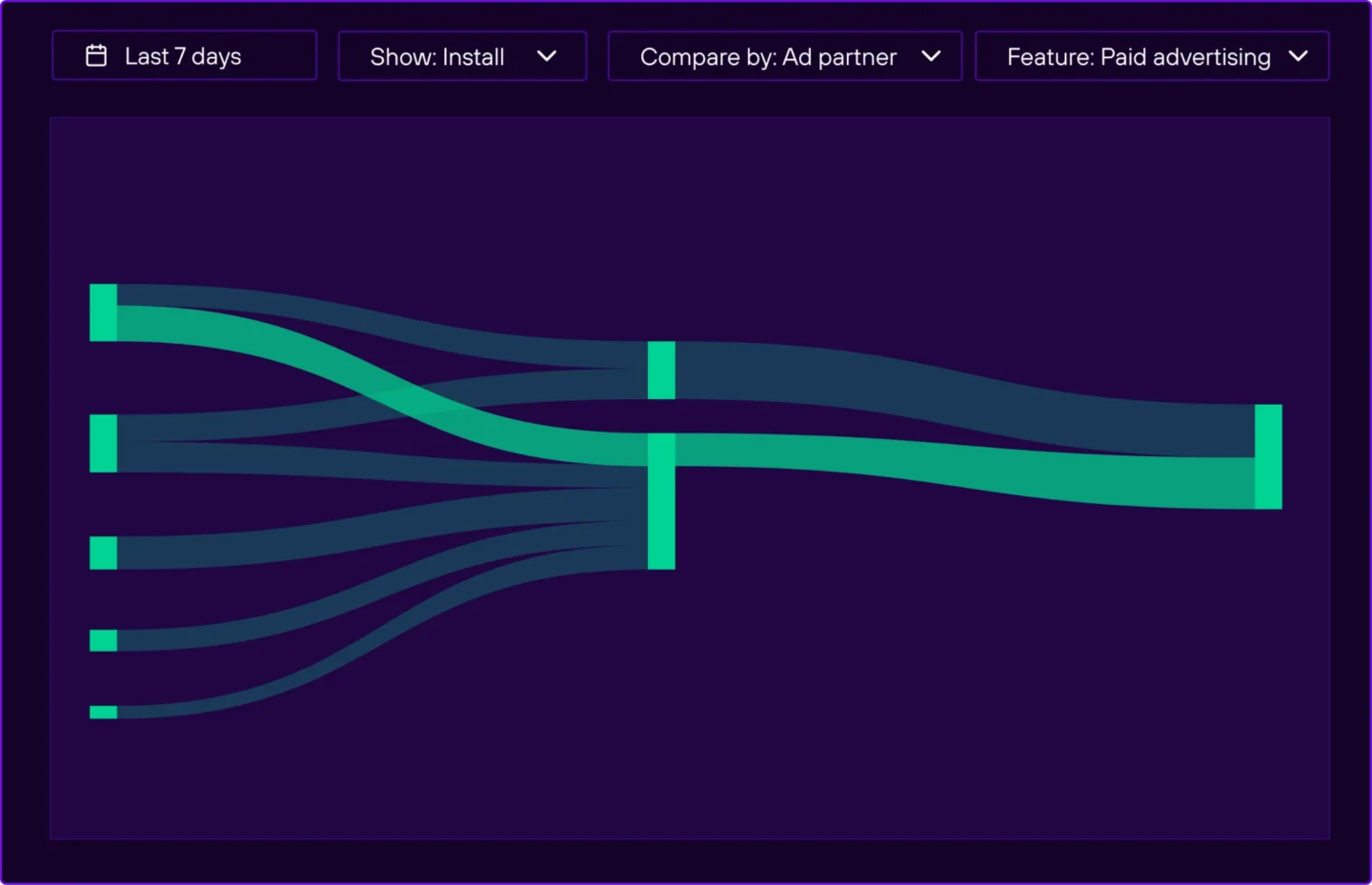
Most teams start with last-touch as their primary model. It’s simple, aligns with how ad networks report, and gives you a consistent baseline for comparing cost per install (CPI) across partners. The limitation isn’t that last-touch is wrong; it’s that it only tells part of the story. Channels that introduce users early in the journey rarely get the final click, which means their contribution gets systematically undercounted. Layering in a multi-touch view alongside last-touch gives you a more complete picture for evaluating upper-funnel investment and understanding which campaigns introduce your highest-value users.
The practical constraint is your data environment. On iOS, Apple’s App Tracking Transparency (ATT) opt-outs mean you’re often combining multiple signals — SKAdNetwork (SKAN) data, consented device-level data, and probabilistic matching — rather than relying on user-level observability across the full funnel. Attribution models that assume complete signal will be less reliable here. On Android, broader access to advertising identifiers currently supports more detailed multi-touch analysis, but the privacy landscape continues to evolve, so building an attribution approach that can incorporate both deterministic and modeled signals will help you maintain continuity as platform policies change.
If your app runs on both platforms, a unified attribution strategy is essential — consistent definitions of installs, reattribution, and in-app events, with clear accommodations for platform-specific data limitations so you’re comparing performance on equal footing.
Lastly, your choice of model is also constrained by your mobile measurement partner (MMP). Not all MMPs support true multi-touch attribution; many offer last-touch as the primary model with limited ability to analyze cross-channel journeys. If multi-touch analysis is a priority, make sure your MMP can actually deliver it, not just report on it after the fact.
How to configure and validate attribution settings
Once you’ve selected an attribution model, it’s time to implement and confirm it behaves as expected across iOS, Android, and web-to-app journeys. Start with these steps:
1. Configure tracking and model parameters
Make sure you’ve integrated your mobile measurement partner’s software development kit (SDK) and that you’ve instrumented key events, such as:
- Installs
- Opens
- Onboarding steps
- Purchases
- Milestones tied to key performance indicators (KPIs)
Also, be sure you configure the attribution settings, like lookback windows and reattribution rules.
2. Run structured path tests
Test how your attribution model handles known user flows. Simulate a flow where a test user taps a social ad or a search ad before installing, and confirm the credited channel matches your model’s rules. Repeat for web-to-app flows, deep links from email, and reengagement campaigns.
3. Monitor ongoing data quality
Compare the share of installs attributed to each major channel in your attribution platform against aggregated reporting from ad networks. Review the proportion of “unattributed” installs, and watch for sudden shifts that might signal tracking or configuration issues.
Attribution model checklist and next steps
Before you finalize your attribution approach, use this checklist to stress-test your plan and surface gaps that could limit your insights.
- Business goal fit: Have you matched your primary attribution model to your main KPI, such as acquisition, activation, or revenue?
- Cross-platform coverage: Does your setup account for both iOS and Android, including privacy-restricted traffic and SKAN data where relevant?
- Lookback windows: Have you aligned your click and impression windows with real user decision timelines for your category?
- Journey visibility: Do you have at least one view that considers multiple touchpoints, even if last-click is still your main optimization model?
- Reattribution logic: Have you clearly defined when reengagement campaigns can claim credit for returning users?
- Validation plan: Do you regularly ensure attribution outputs match expected behavior across channels and platforms?
Treat attribution as an ongoing program, not a one-time decision. Revisiting your model as your budgets, channels, and privacy requirements change will keep your measurement aligned with how your users actually behave.Branch is focused on helping app marketers do exactly this: unify touchpoints across platforms, apply attribution models that fit your strategy, and adapt measurement as discovery surfaces evolve. To see how newer approaches can deepen your insight, explore Branch’s cross-platform attribution measurement to make smarter marketing decisions.