
Topics
Persona

Blog
The mobile app attribution landscape never stands still. Ad networks merge, new inventory sources emerge (and sometimes vanish), and government regulations continue to evolve. On top of that, user privacy expectations are higher than ever.

Blog
Who knew one of the most important parts of your mobile strategy is also the most overlooked? Take a deep dive into deep linking and learn why it’s the hidden key to customer retention.

Blog
Where is the real value for today’s mobile apps and what can you expect as AI plays an even larger role in this evolving market? Get these answers and more in this Q&A with Branch’s Head of Business Strategy.

Blog
Despite its scale and attention, CTV has been stuck in a black box — high spend, little proof of performance. For years, advertisers have poured budget into connected TV campaigns without knowing what was truly driving installs, re-engagements, or revenue. Fragmented signals, privacy shifts, and siloed measurement have left performance marketers guessing. And guessing is expensive. That ends now.

Blog
Brands succeeding in AIO aren’t reinventing the wheel. They’re building on fundamentals and adapting for AI realities. Here’s a five-pillar AIO growth framework, a practical roadmap for brands who want to move beyond SEO and capture growth in an AI-first world.

Blog
Performance metrics like DAUs and MAUs are smoke and mirrors when measuring growth. Learn the secret to creating meaningful user experiences that drive customer retention.

Blog
In today’s on-demand world, consumers expect fast, seamless solutions, especially when they need help. For any company that operates a call center, the stakes are high: every inbound support call costs money, strains resources, and risks customer frustration. That’s where call center deflection becomes a strategic advantage — and Branch can help you do it… Read more »
Blog
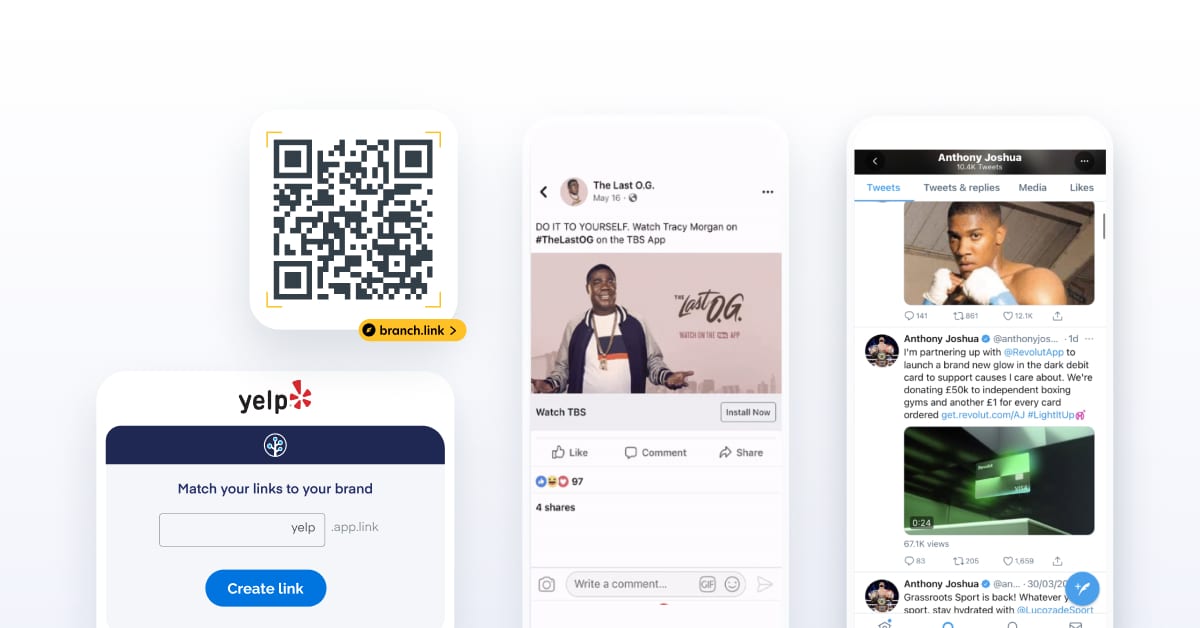
Combining both linking and measurement in one solution makes it easy to create, manage, and track deep links, while also providing reliable attribution for all your marketing campaigns — paid, owned, and earned.

Blog
A reattribution window is a set period of time after someone installs an app during which a reinstall (or reopen via an ad) can still be counted as a “new” attributed conversion. Mobile measurement partners (MMPs) focused on install-only reporting typically use reattribution windows to give credit to campaigns driving reengagement via app redownloads.