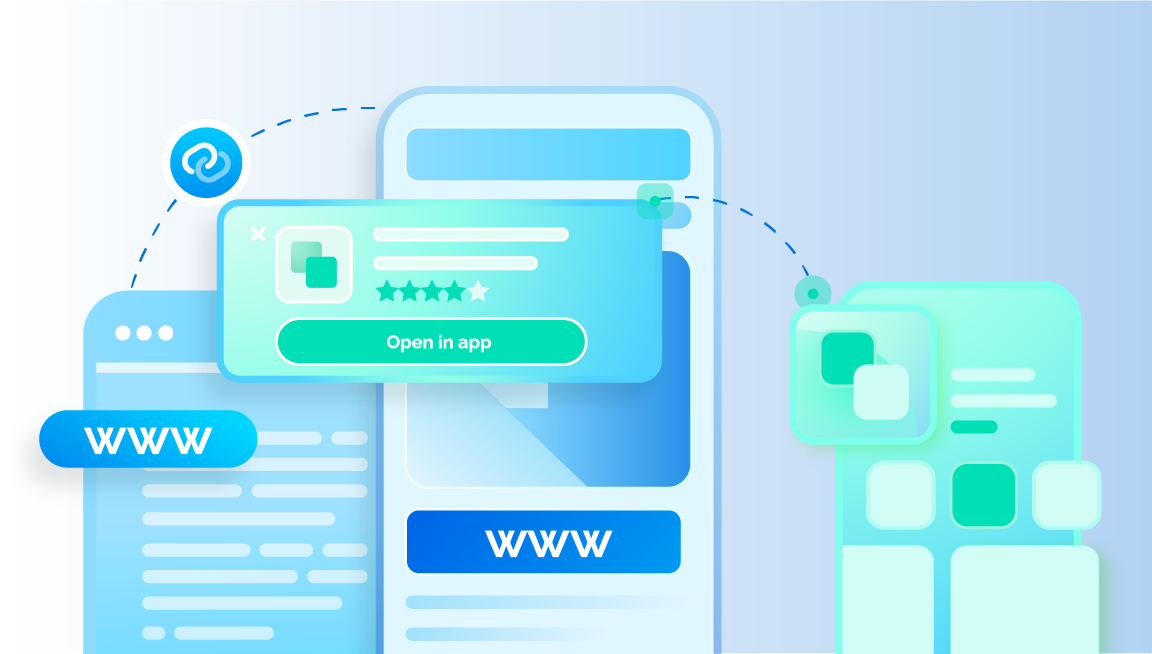
Google officially discontinued Firebase Dynamic Links on August 25, 2025, ending support for a widely adopted and free deep linking solution in the mobile ecosystem. Thousands of app developer teams began searching for a Firebase Dynamic Links alternative that could maintain their user experience without disrupting live campaigns or breaking existing links.
Google announced the shutdown in advance, but the transition still represents a significant technical lift. Teams with limited developer resources faced unplanned migration.
Here’s the opportunity hidden in this disruption: Firebase Dynamic Links was a solid foundation, but it lacked the sophisticated attribution, personalization, and marketer-friendly tools that modern growth teams need.
Purpose-built deep linking platforms deliver the best balance of functionality, speed to market, and ongoing support, without requiring your engineering team to become deep linking experts.
What happened to Firebase Dynamic Links?
Google’s decision to sunset Firebase Dynamic Links left every app team using the service to search for a suitable replacement. There are three viable options, each with distinct trade-offs between control, complexity, and capability.
Native App Links and Universal Links (DIY)
Apple Universal Links and Android App Links are platform-native deep linking mechanisms built directly into iOS and Android that route users into your app from web links without third-party dependencies. They require significant trade-offs:
- What you gain: Zero vendor costs, direct platform integration, complete infrastructure control, and no data passing through external services
- What you lose: Deferred deep linking (users who install after clicking a link lose all context), marketer-managed link creation, built-in attribution, and unified analytics across platforms
Every campaign change requires a developer, and every OS update is your team’s problem to troubleshoot.
The DIY approach suits teams with dedicated engineering resources and simple linking needs. Marketing teams that need capabilities to launch campaigns or prove attribution across the customer journey that native links do not provide.
Purpose-built deep linking platforms (vendor solutions)
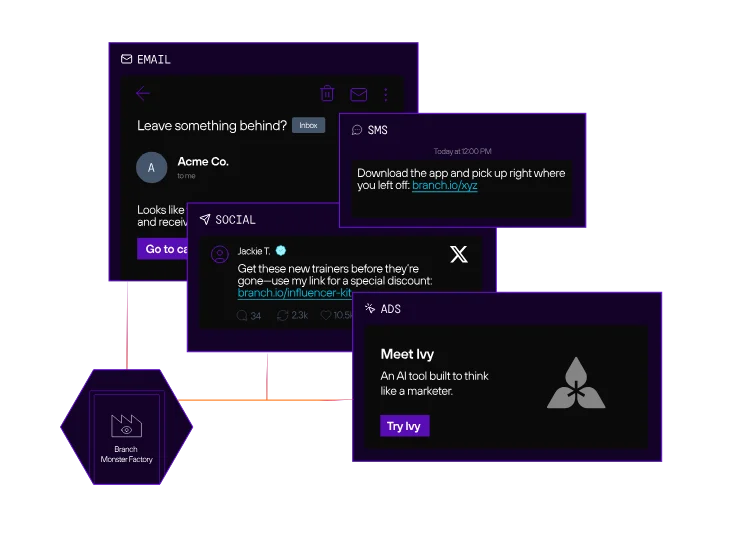
Purpose-built platforms deliver the full spectrum of deep linking capabilities, like deferred deep linking, cross-platform attribution, link management dashboards, and real-time analytics, in a single integrated solution. They handle complex infrastructure while giving marketers direct control over link creation and campaign management.
The standout advantage is speed to value. Platforms like Branch get you operational in weeks rather than quarters. Branch delivers A/B testing, audience segmentation, and multitouch attribution that Firebase never offered.
Purpose-built platforms typically cost less than the engineering time required to build and maintain equivalent functionality in house.
Custom deep link server (build your own)
Building proprietary deep linking infrastructure gives you complete control. It also requires taking on the full engineering burden of creating, maintaining, and scaling a solution. It requires:
- Link generation APIs
- Routing logic
- Deferred deep linking mechanisms
- Attribution tracking
- Analytics infrastructure
- Fallback handling
- Security protocols
Every iOS or Android update risks breaking your routing logic, requiring immediate engineering attention.
This approach suited a number of complex use cases. Purpose-built platforms now cover or adapt to strict compliance and data governance requirements. The engineering investment required more than a purpose-built platform, and redirects resources from product development.
Best Firebase Dynamic Links alternative by use case
The right Firebase Dynamic Links alternative depends on technical capacity, growth stage, and how deeply deep linking integrates into your user acquisition strategy.
Enterprise apps with complex attribution needs require purpose-built platforms. Multichannel campaigns across paid social, email, SMS, and partner networks require unified attribution that connects every touchpoint to downstream revenue. Branch delivers deferred deep linking, cross-platform measurement, and marketer-managed link creation without constant developer intervention.
Early-stage startups with limited budgets can start with native Universal Links and App Links if use cases are straightforward. This suits teams primarily driving users from owned channels with minimal campaign tracking needs without sacrificing attribution granularity and marketer autonomy.
Apps with strict data governance policies previously required custom deep link servers, particularly in highly regulated industries or when integrating deep linking into proprietary systems. Branch meet those needs without the significant up-front investment and ongoing maintenance a custom build demands.
Key considerations for your business model
Your revenue model shapes which solution delivers the best return on investment.
- Transaction-based businesses (such as e-commerce, marketplaces, and food delivery) need granular attribution connecting every dollar spent to specific marketing touchpoints
- Subscription-driven apps (such as streaming, SaaS, and fitness) need deep linking that reduces onboarding friction and optimizes free trial conversions
- Ad-supported models (such as news, social, and gaming) require solutions that maximize session depth through personalized content routing
- Referral-heavy businesses such as fintech, gig economy, and social commerce) depend on reliable deferred deep linking that preserves referral context through the install flow
Migrating from Firebase Dynamic Links
Migrating from Firebase Dynamic Links to Branch doesn’t require a rip-and-replace approach. The Branch software development kit (SDK) runs alongside the Firebase SDK, you can transition gradually — testing new infrastructure on low-risk campaigns before switching your highest-traffic channels.
Before you start, identify every Firebase Dynamic Link currently in production across email, SMS, social, QR codes, and partner integrations. That audit shapes your migration sequence and helps you establish performance baselines to measure against once Branch is live.
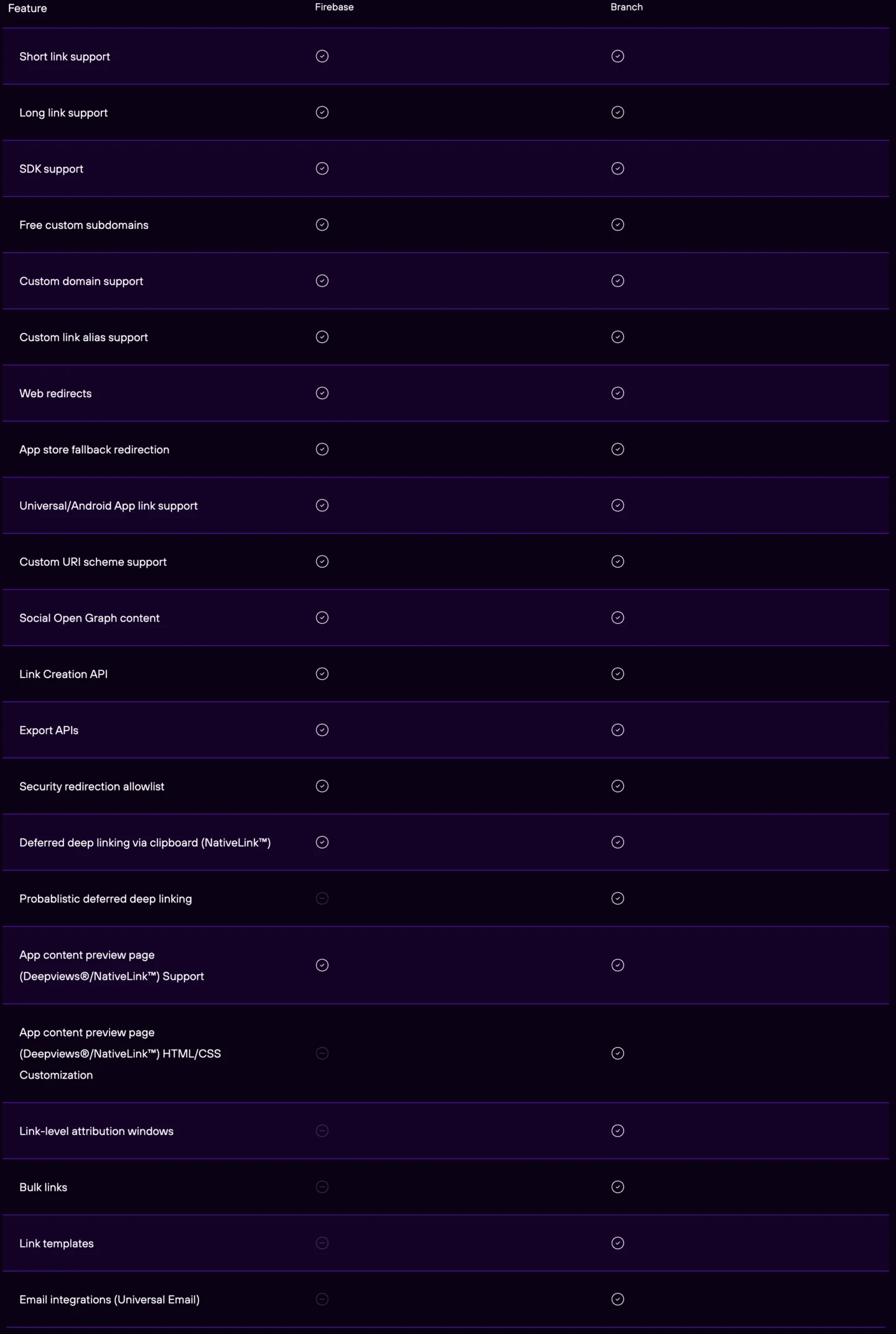
Branch supports every link creation method Firebase offered, including console-created links, Dynamic Link Builder API, REST API, and long links.
For the full step-by-step walkthrough, including SDK setup, parameter mapping, and link routing configuration, follow our complete Firebase Dynamic Links migration guide.
For more details on how we can help you reach your goals and monitor performance for data-driven growth, request a demo with our team.
Frequently asked questions about Firebase Dynamic Links migration
Google ended Firebase Dynamic Links on August 25, 2025, following a deprecation announcement in 2023. They turned the Firebase console read-only for Dynamic Links on May 24, 2024, blocking new link creation through the console while existing links and the API continued to function until the final shutdown.
Past the shutdown date, your existing links may still redirect users, but you no longer have access to the Firebase console for management, analytics, or troubleshooting. Migrating to a new platform ensures control over your deep linking infrastructure.
Running multiple deep linking solutions in parallel during migration reduces transition risk. Your app can handle both Firebase Dynamic Links (for legacy campaigns) and your new solution simultaneously by configuring your app to recognize and route both URL patterns. This lets you migrate gradually, testing new infrastructure with low-risk campaigns before switching high-volume channels.
Treat dual-system operation as a temporary state with a defined end date, not a permanent architecture.
Implement comprehensive redirect rules that map old Firebase Dynamic Link URLs to your new deep linking infrastructure. Test every critical user journey, including app installs, reengagement campaigns, email links, social shares, across both iOS and Android to verify that users land on the intended in-app content regardless of which link format they select.
Monitor fallback URLs closely, since these determine where users land if deep linking fails, and prioritize migrating your highest-traffic campaigns first to catch issues before they affect your entire user base.
Branch supports everything Firebase Dynamic Links offered, including short and long links, custom domains, SDK-based link creation, deferred deep linking, and app store fallback redirection. Where Branch goes further is in the features Firebase never built: link-level attribution, cross-channel measurement, marketer-managed link creation without developer involvement, email integrations, and bulk link creation. For teams that were hitting the ceiling of what Firebase could do, the migration is also an upgrade.