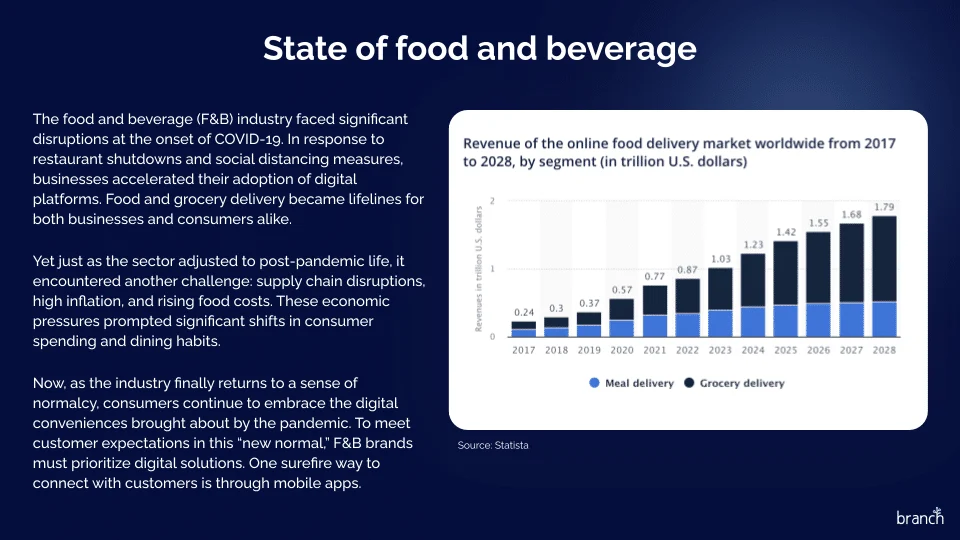
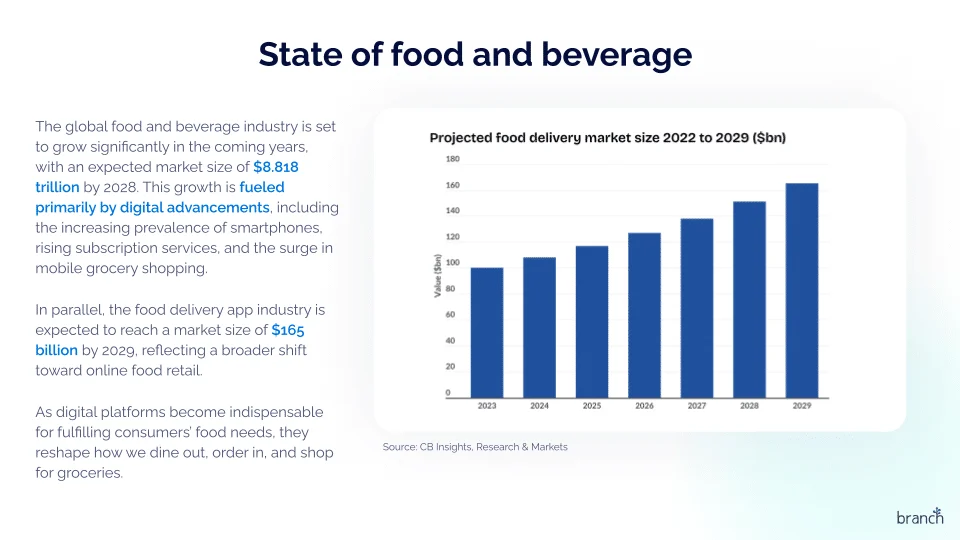
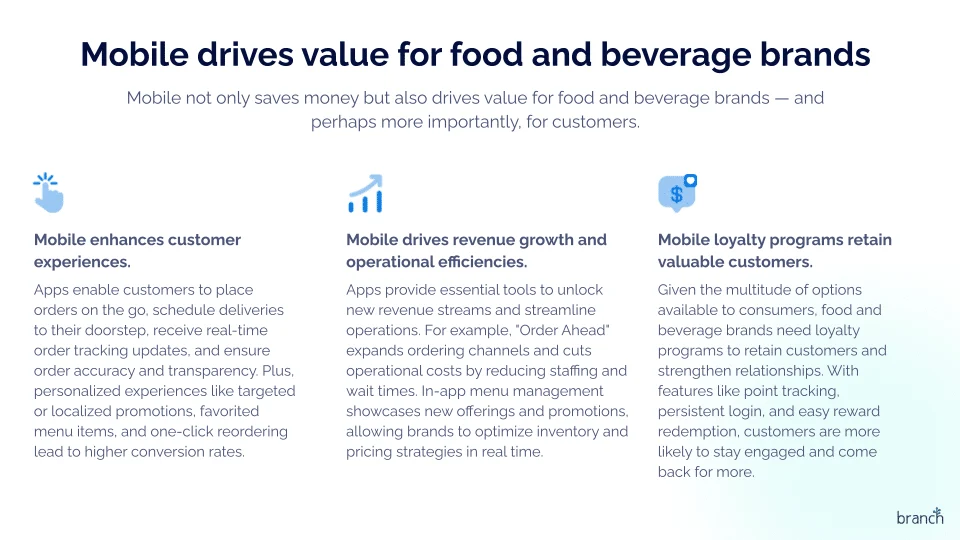
The food and beverage industry is thriving, with a projected market size of $8.818 trillion by 2028. Digital platforms, particularly mobile apps, are reshaping how consumers dine out, order in, and shop for groceries. Food delivery apps alone are expected to reach a market size of $165 billion by 2029, reflecting this ongoing shift toward mobile-first experiences. For F&B brands, mobile apps aren’t just nice-to-have; they’re essential. App users don’t just engage more — they spend more. In fact, app users spend 3.3x more than non-app users, making them a powerful driver of growth, retention, and conversions. Packed with expert advice, industry insights, and actionable tips, the Food and Beverage Mobile Growth Playbook is your guide to tapping into the full potential of mobile apps.
What’s inside:
- The state of food and beverage today, backed by industry data
- Mobile’s role in transforming the F&B landscape and meeting evolving customer expectations
- Proven strategies to acquire app users cost-effectively and at scale
- Engagement tactics to keep your app top-of-mind for customers
- Tips to drive conversions and maximize ROI through mobile
Download the playbook now to unlock new opportunities for growth.
Get a sneak peak: